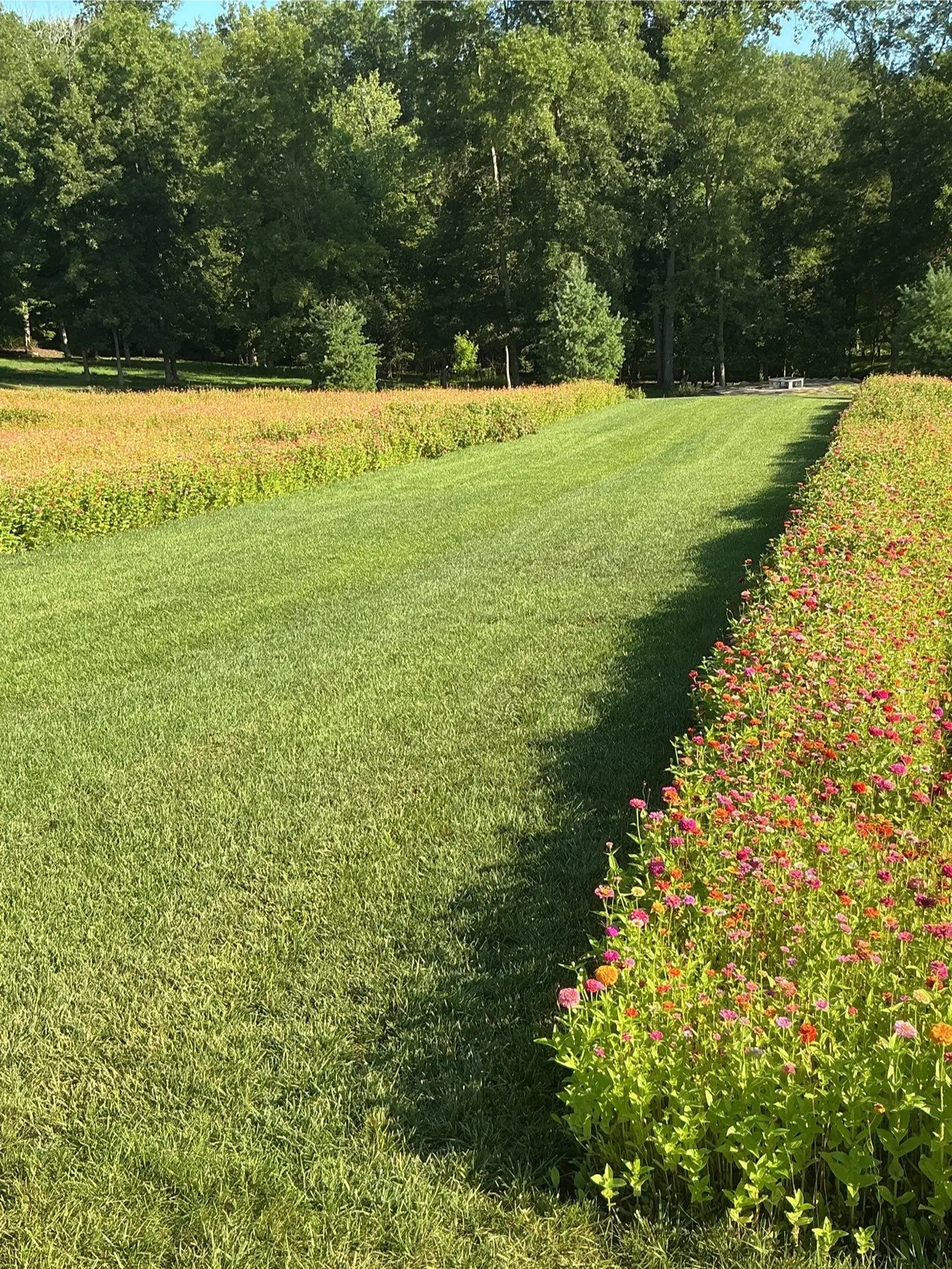
There is something beautiful about a great lawn. We know that better than most.
But does every acre of your property really need to be lawn?
For homeowners with larger properties in Bucks County and Upper Bucks County, maintaining expansive areas of turf can mean a lot of mowing, watering, fertilizing, and caring for spaces that may rarely be used. More and more property owners are looking at no-mow lawn alternatives and asking a different question:
What if we kept a beautiful lawn where it matters and allowed other parts of the property to become something more natural?
For many properties, the answer may be a native meadow, naturalized lawn area, or carefully planned combination of turf and meadow.
The goal isn’t to stop caring for the property. In fact, a well-planned meadow should look intentional.
It is simply a different way of looking at the landscape.
You Don’t Have to Get Rid of Your Lawn
One of the biggest misconceptions about lawn alternatives is that choosing a meadow means replacing the entire lawn.
Usually, that isn’t what we recommend.
Traditional turf is wonderful around the home and in areas that are actively used; around patios and pools, where children or pets play, alongside walkways, and anywhere a crisp green lawn adds to the overall appearance of the property.
But on a larger Bucks County property, there may also be substantial lawn areas that are simply being mowed because they have always been mowed.
Those are the places worth looking at differently.
A large open area along a driveway, the back portion of an estate, a sunny slope, acreage bordering a woodland, or an unused stretch of lawn can potentially become a native meadow or low-mow landscape.
Instead of thinking about lawn versus meadow, we prefer to think about putting each one where it makes the most sense.
What Is a No-Mow Lawn?
The term “no-mow lawn” can actually describe several different types of landscapes.
For some homeowners, it means using lower-growing grasses that require less frequent mowing.
For others, it means allowing portions of the property to become more naturalized.
And increasingly, homeowners are using the term when they are really looking for a meadow-style landscape made up of native grasses, flowering perennials, and other plants suited to the site.
A true meadow isn’t completely maintenance-free; and we don’t love promising anything in a landscape will be.
But once established, a properly managed native meadow requires dramatically less mowing than conventional turf. Penn State notes that established native meadows may only need to be cut back once or twice annually, along with periodic management of weeds and invasive plants.
That’s very different from mowing acres of lawn every week throughout the growing season.
Why Homeowners Are Converting Lawn to Meadow
There isn’t one reason people decide to create a meadow.
Sometimes it starts with maintenance.
Someone owns several acres and realizes that a surprising amount of time and money is being spent maintaining grass that nobody actually uses.
Sometimes it is about appearance.
A meadow can soften a large property and create a beautiful transition between the more manicured landscape surrounding the house and the natural areas farther away.
Sometimes homeowners want to attract more butterflies, birds, bees, and other pollinators.
And sometimes they simply want their property to feel more connected to the Bucks County landscape around it.
Pennsylvania’s Department of Conservation and Natural Resources is actively encouraging homeowners to consider converting portions of lawn into meadow or other habitat, in part because doing so can reduce mowing while adding diversity and interest to a property.
Whatever the motivation, a successful meadow should still feel like it belongs to the property.
Where Does a Meadow Work Best?
Not every lawn should become a meadow.
And not every location is well suited for one.
That’s why the first step should be looking at the property as a whole.
Some of our favorite opportunities for lawn-to-meadow conversion on larger properties include:
- Large sunny lawn areas that aren’t actively used
- Long driveway approaches
- Open areas along property boundaries
- Fields adjoining woodlands
- Difficult-to-mow slopes
- Areas surrounding orchards
- Large expanses behind the main residence
- Transitional areas between manicured gardens and natural woods
Open, sunny lawn areas are particularly good candidates for native meadow conversion.
There may also be places where a meadow isn’t the best answer. Shady conditions, drainage issues, existing invasive plants, property use, neighboring properties, and local ordinances can all affect what makes sense.
That is why we would never look at a property and simply say, “Stop mowing here.”
There is more to it than that.
A Meadow Is Not Just an Overgrown Lawn
This is probably the most important distinction.
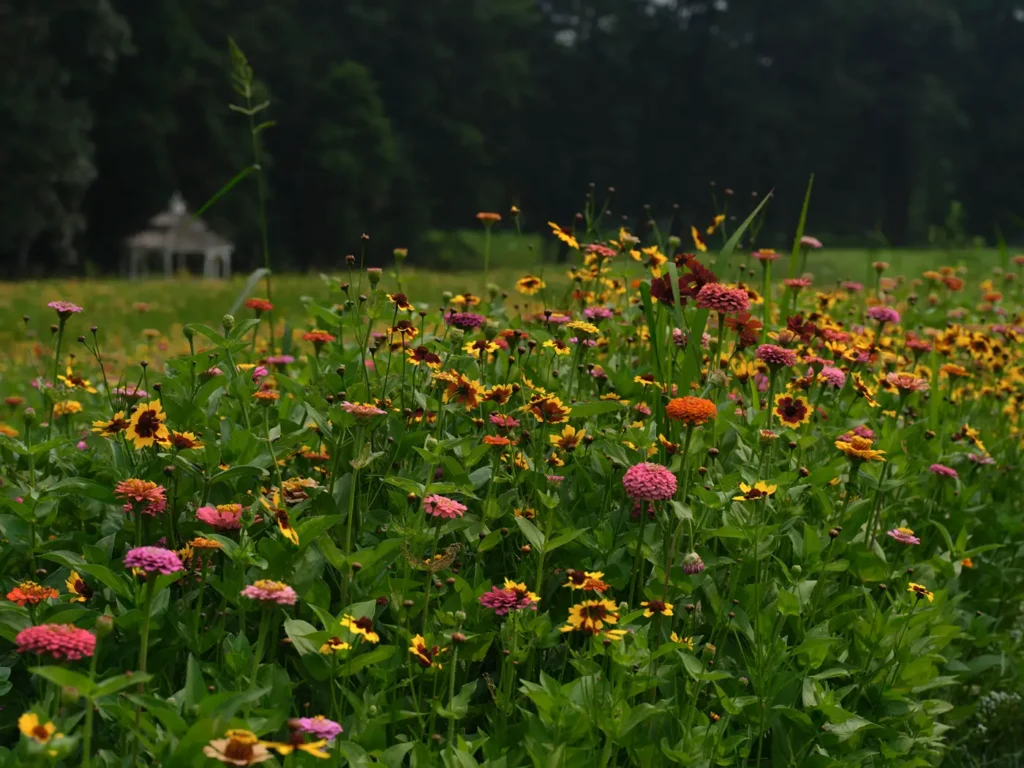
There is a big difference between a designed meadow and an area where someone simply stopped mowing.
Both approaches can have a place, but they do not necessarily produce the same result.
When we are creating a meadow that will become part of a home’s landscape, we want it to look deliberate.
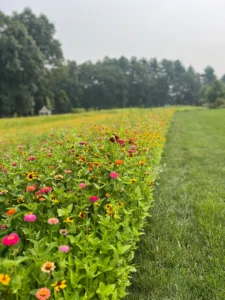
That can mean defining the meadow with a clean mowed edge.
It may mean creating wide walking paths through it.
It could include carefully preserving views from the house.
A specimen tree might sit within the meadow.
A path could connect the house to an orchard, garden, firepit, or wooded area.
The shape of the meadow itself matters.
Those details are particularly important on higher-end properties, where the goal isn’t simply less mowing.
The goal is to make the property more beautiful.
Native Meadow vs. Wildflower Meadow
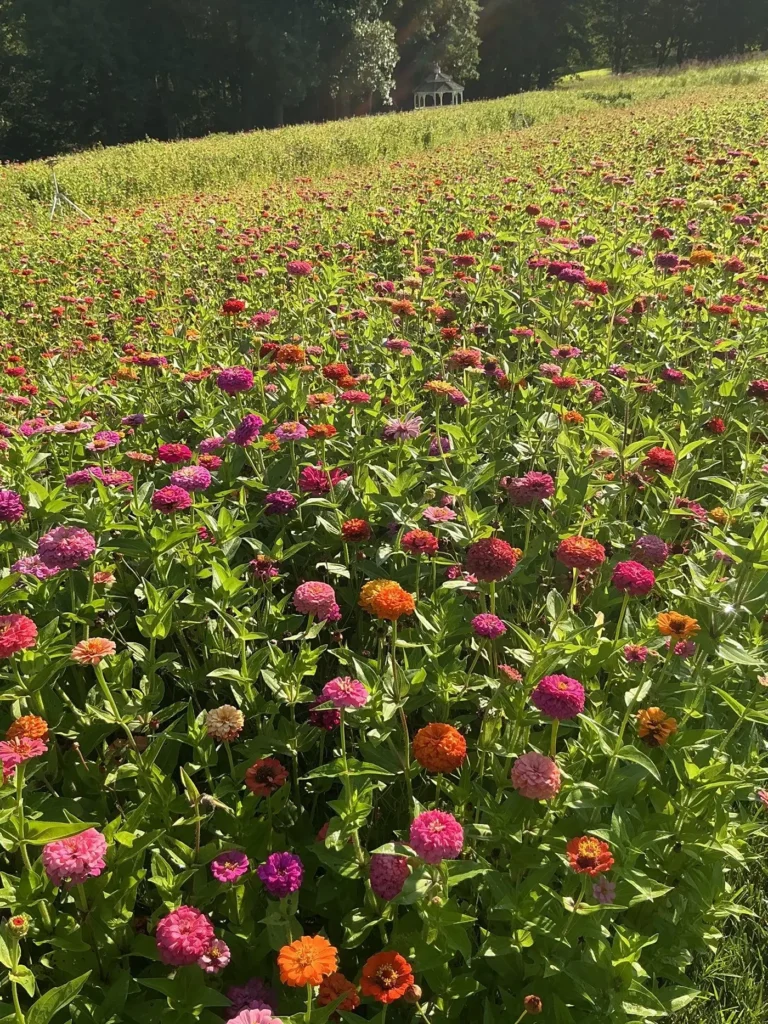
You’ll often hear the terms native meadow and wildflower meadow used interchangeably, but they aren’t necessarily the same thing.
A packet of wildflower seed can contain plants from many different regions, and some mixes aren’t particularly well suited to Pennsylvania.
A native meadow is developed using plants appropriate to our region and to the specific conditions of the site.
Pennsylvania has roughly 2,100 native plant species, including native grasses, sedges, rushes and wildflowers. Native plants are already adapted to local climate and growing conditions.
A meadow may include both flowering perennials and native grasses.
That combination matters.
The flowers provide seasonal interest, but the grasses create movement, texture and structure; particularly in fall and winter.
A good meadow shouldn’t only look beautiful for three weeks in June.
We want to think about how it will look throughout the year.
Converting Lawn to Meadow Takes Time
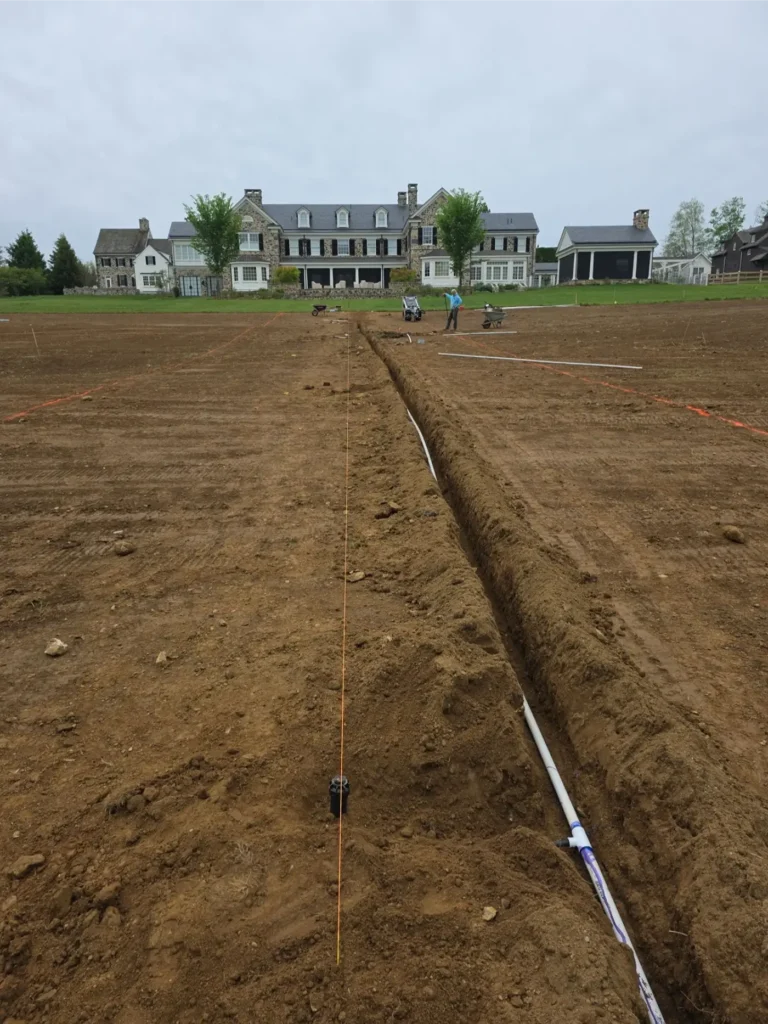
This is another part of meadow installation that homeowners should understand before beginning.
A meadow isn’t instant landscaping.
Perennial meadow plants and native grasses spend a significant amount of their early growth establishing root systems. Penn State advises that a perennial meadow typically takes two to three years to become fully established.
Year one can sometimes test your patience.
Year two begins to show you where things are heading.
By year three, the meadow can start to feel like the landscape you originally envisioned.
Proper site preparation makes a tremendous difference.
Existing turf and unwanted vegetation may need to be removed or controlled before planting. Weed pressure needs to be considered. Seed or plant selection needs to match the soil, sunlight, moisture and overall design goals.
Simply throwing wildflower seed over an existing lawn generally isn’t the way to create a successful long-term meadow.
Meadow Maintenance Is Different — Not Nonexistent
We prefer the term lower maintenance rather than maintenance-free.
A meadow still needs management.
During establishment, weeds and invasive species need to be watched carefully. Depending on how the meadow is designed, certain plants may need to be controlled so they don’t overwhelm others.
Once established, mowing or cutting back the meadow periodically helps prevent woody plants and trees from eventually taking over.
The difference is that you are no longer treating that portion of the property as traditional turf.
Instead of weekly mowing throughout the growing season, the landscape follows a much more natural cycle.
No-Mow Landscaping Can Work Especially Well on Large Properties
This is where we think meadow landscapes become particularly interesting.
On a smaller suburban lot, every square foot tends to have a specific purpose.
On a property with several acres, there is more opportunity to create layers. For larger properties throughout Bucks County and Upper Bucks County, no-mow landscaping can be especially effective where open acreage, long driveways, woodland edges, and unused lawn create opportunities for a more natural landscape.
Imagine arriving along a driveway framed by meadow grasses and seasonal flowers.
Closer to the house, the landscape becomes more refined.
The meadow transitions into a carefully maintained lawn.
The lawn leads toward the gardens, patio, pool, or outdoor living area.
Farther away, the landscape becomes natural again as it approaches woodland or open acreage.
That combination can actually make the manicured areas feel more special because there is contrast.
Not everything has to look the same.
What About Meadows Around an Orchard?
We particularly love the relationship between meadows and home orchards.
Instead of surrounding an orchard with a huge uninterrupted lawn, meadow areas can help create a softer, more agricultural feeling around fruit trees.
A mowed path can lead through the meadow to the orchard.
You can maintain turf immediately around areas where access is needed while allowing other portions to naturalize.
For larger Bucks County properties, the combination of orchard, meadow, garden and carefully maintained lawn can create a landscape that feels established rather than newly landscaped. For homeowners considering adding an orchard as part of the larger landscape, PLANT Design Group has additional resources on designing and planting home orchards in Bucks County.
Could Part of Your Lawn Become a Meadow?
If you look across your property and see areas of lawn that you maintain but rarely use, those spaces may be worth reconsidering.
You don’t necessarily need less landscape.
You may simply need a different kind of landscape.
At Kelly Grow Turf & Plant Management, we spend a lot of time thinking about healthy turf. That experience also helps us recognize the places where turf makes sense — and the places where another solution might serve the property better.
For homeowners throughout Bucks County and Upper Bucks County, including Doylestown, New Hope, Newtown, Yardley, Pipersville, Ottsville, Upper Black Eddy and surrounding communities, we can evaluate existing lawn areas and help determine whether a native meadow, no-mow area, or lawn-to-meadow conversion could work as part of the larger property.
Sometimes the answer is maintaining a beautiful lawn.
Sometimes it’s creating a meadow.
And on many of our favorite properties, it’s a little bit of both.
Considering converting part of your Bucks County or Upper Bucks County property from traditional lawn to meadow? Contact Kelly Grow Turf & Plant Management to discuss the possibilities for your property.