How to Care for Your Lawn After Aeration and Overseeding
Aeration and overseeding can help create a thicker, healthier lawn, but successful results also depend on what happens after the service.
During the first several weeks, new seed needs consistent moisture, careful mowing, and protection from unnecessary traffic. Kelly Grow Turf & Plant Management created this post-seeding care guide to help Bucks County homeowners protect their investment and give new grass the best opportunity to establish.
If you are still considering service, read what our turf experts recommend about fall aeration and seeding in Bucks County.
Before Your Aeration and Seeding Service
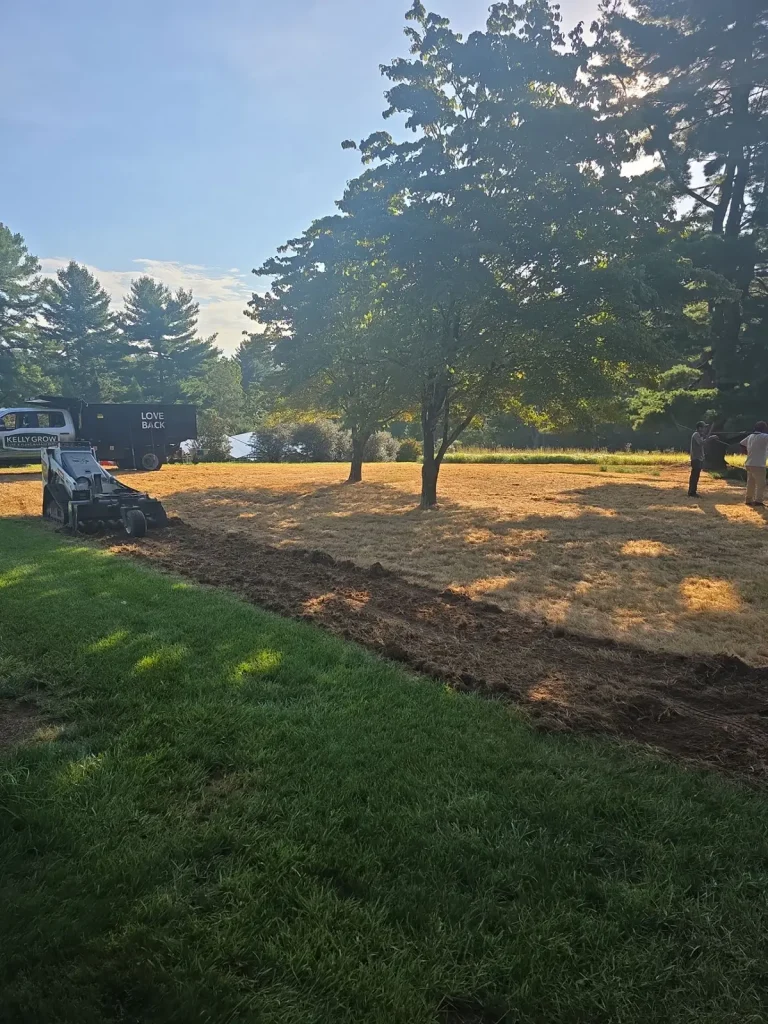
If possible, mow your lawn one setting lower than usual during the week before your scheduled service. This helps the seed reach the soil and allows water and sunlight to reach newly seeded areas more easily.
Do not scalp the lawn or cut it extremely short. If you are unable to mow before the appointment, our team can still complete the scheduled service.
Before our crew arrives:
- Remove toys, hoses, furniture, and other objects from the lawn
- Mark irrigation heads, landscape lighting, invisible pet fences, and hidden obstacles
- Make sure gates are unlocked and the lawn is accessible
- Check that sprinklers or irrigation systems are working properly
- Plan how the lawn will be watered after service
For homeowners with busy schedules, sprinklers connected to timers can make consistent watering easier.
Stage 1: Keep the Seed Moist During Germination
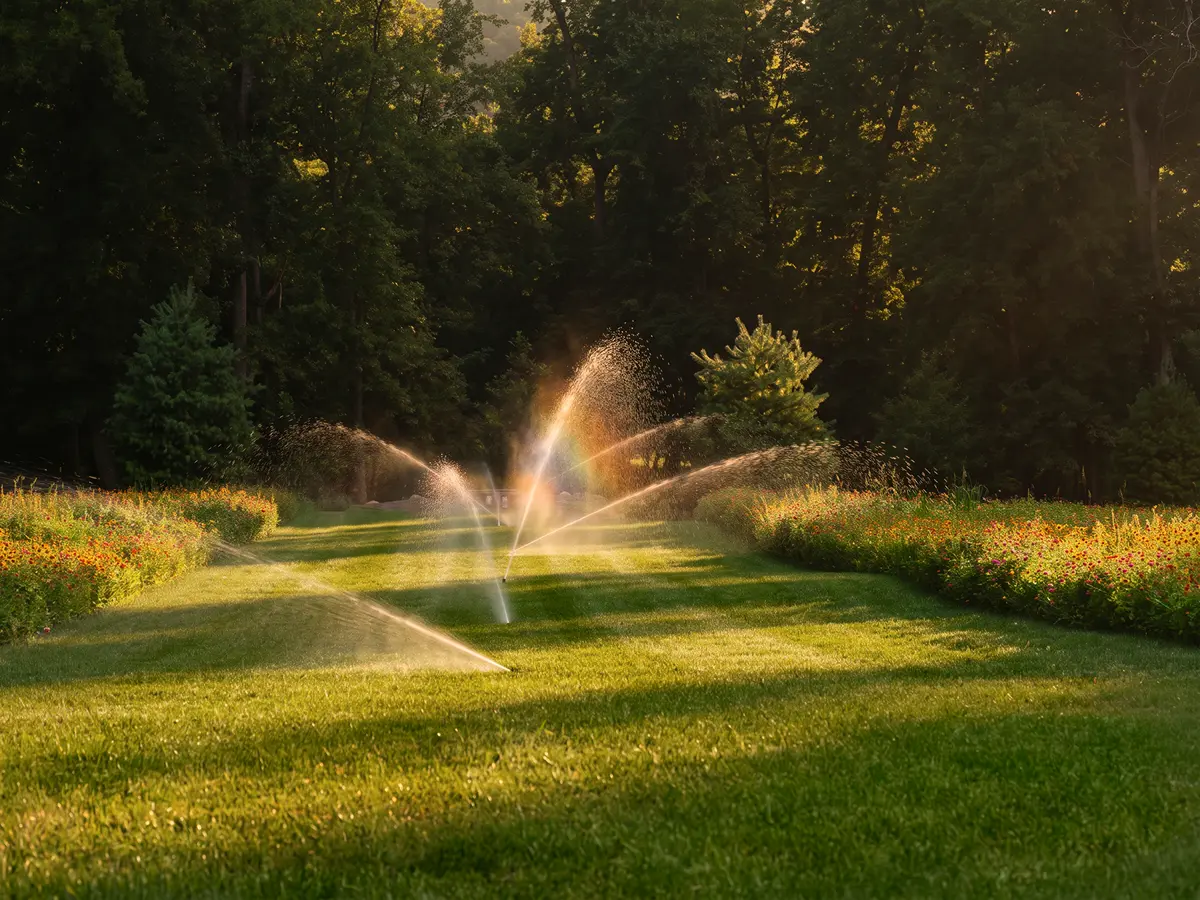
Kelly Grow Turf recommends watering newly seeded areas lightly once or twice a day to keep the soil surface moist during germination. Adjust your watering based on rainfall and weather because sunny, windy, or elevated areas may dry more quickly.
The goal is consistent moisture without flooding the lawn. Avoid puddles, muddy conditions, and runoff that can move seed away from the areas where it was applied.
On an overseeded lawn, the existing grass helps shade the soil, retain moisture, and hold seed in place. Occasional deeper watering may also be needed to support the established turf.
Expert Tip: Check the soil instead of relying only on a timer. The surface should feel moist, not saturated.
Stage 2: Adjust Watering After the Grass Sprouts
Once new grass begins to appear, gradually reduce how often you water while increasing the duration of each watering. Allow the soil surface to dry slightly between watering sessions without letting the young grass become severely stressed.
As the seedlings grow, moisture needs to reach farther into the soil to support developing roots. A lawn in full sun may still require more frequent watering than a shaded or low-lying area.
Avoid repeatedly saturating the lawn. Excessive moisture, poor drainage, and humid weather can create conditions favorable for turf disease. Penn State Extension identifies prolonged moisture and excessive irrigation as conditions that can contribute to damping-off diseases involving Pythium and other fungi.
More water is not always better. New grass needs dependable moisture, but it also needs properly drained soil.
Stage 3: Transition to Deeper Watering
When the new grass is a few inches tall and developing stronger roots, begin transitioning to deeper, less frequent watering. Depending on rainfall and temperature, watering may be reduced to approximately once every two or three days.
Once the lawn is established and ready for normal mowing, the goal is to moisten the soil approximately four inches into the root zone. Allowing the soil to dry moderately between deeper waterings encourages stronger root development.
Early morning is generally the best time to water. This reduces evaporation while allowing the grass blades to dry during the day.
Watch for early signs that the lawn needs water:
- Grass develops a dull or blue-green appearance
- Grass blades begin to fold
- Footprints remain visible
- Soil feels dry within the root zone
- Areas near pavement or on slopes dry faster than the rest of the lawn
Watering needs will vary across the property. Check the actual soil conditions and adjust for rainfall, sunlight, wind, and temperature.
When Should You Mow After Overseeding?
Do not schedule the first mowing according to the calendar alone. The new grass must be tall enough to mow, and the soil must be firm enough to support the mower without creating ruts.
Our turf experts generally recommend waiting until the new grass reaches approximately four inches tall, then mowing it to about three inches. Never remove more than one-third of the grass blade during one mowing.
For the first several mowings:
- Wait until the lawn is reasonably dry
- Use sharp mower blades
- Avoid cutting the grass too short
- Move slowly and turn carefully
- Do not leave heavy clumps of grass on the lawn
- Limit unnecessary mower passes
If you use a professional mowing company, tell the crew that the lawn was recently aerated and overseeded. Ask the operators to avoid aggressive turns and repeated passes over delicate areas.
Large commercial mowers can leave wheel marks or disturb young grass when the soil is wet or the equipment is operated too aggressively.
Should Aeration Plugs Be Removed?
No. Leave the small soil plugs created by core aeration on the lawn.
The plugs will gradually break apart through rainfall, watering, mowing, and normal lawn activity. Although they may be noticeable at first, they are a normal and beneficial part of the aeration process.
Limit Traffic While New Grass Develops
Reduce foot traffic while the seed is germinating and the young grass is becoming established. Bare or heavily renovated areas are especially vulnerable because they do not have existing turf to protect the soil and seedlings.
Keep children, pets, lawn equipment, and delivery traffic away from delicate areas as much as possible. An overseeded lawn may tolerate light, necessary foot traffic, but repeated use should still be avoided.
Wait until the new lawn has been mowed several times before returning to normal activity.
Why Is the New Grass Growing Unevenly?
New grass does not always appear everywhere at the same time. Germination and early growth can vary because of:
- Grass variety
- Soil temperature
- Moisture
- Sunlight
- Seed-to-soil contact
- Soil compaction
- Irrigation coverage
- Weather conditions
Different varieties within the same seed blend may also germinate at different rates.
Kelly Grow Turf uses a premium custom Tall Fescue blend selected for the growing conditions found throughout Bucks County and southeastern Pennsylvania. Continue following the recommended watering schedule and allow time for the different varieties to germinate and develop.
When Should You Contact Our Turf Experts?
Contact our team if you notice:
- Water collecting or running off the lawn
- Areas that remain consistently dry despite watering
- Little or no germination after allowing adequate time
- Seed washing away on slopes
- Unusual discoloration or possible signs of disease
- Damage from mowing, animals, or heavy traffic
Every property has different soil, sunlight, drainage, and irrigation conditions. Our turf experts can help you determine whether the lawn needs more time or whether its care should be adjusted.

Give Your New Grass Time to Establish
Successful post-seeding care comes down to consistent moisture, careful mowing, and patience. Every lawn develops differently based on its soil, sunlight, drainage, irrigation coverage, and weather conditions.
If you have questions about watering, germination, or when to mow, contact the Kelly Grow Turf team for guidance.
For more information, visit our fall aeration, seeding, and lawn renovation page.