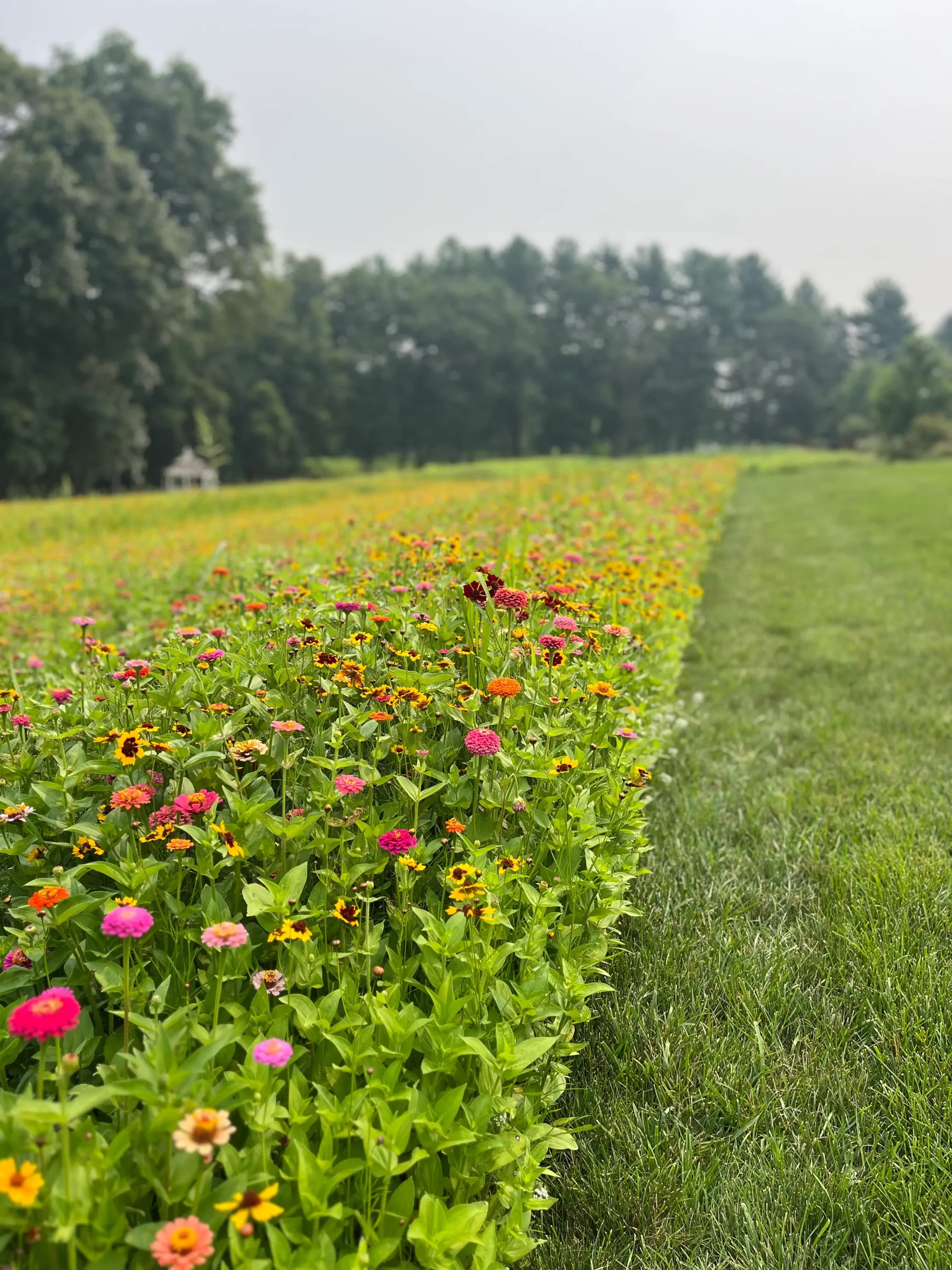
A meadow can completely change the way a property feels. For some homeowners, it may mean transforming one unused section of lawn into something softer and more natural. For others, it may mean creating sweeping meadow areas along a driveway, around an orchard, beside woodland, or across open acreage.
There is no single size or type of property that makes a meadow appropriate. What matters is how the meadow fits into the property as a whole.
For homeowners throughout Bucks County and Upper Bucks County, professional meadow installation can create a beautiful transition between maintained lawn, gardens, woodland, orchards, and other parts of the landscape.
But creating a meadow is very different from simply allowing grass to grow. At Kelly Grow Turf & Plant Management, we begin by looking at the property, how it is used, what is already growing there, and what the homeowner wants the landscape to become.
Because the goal isn’t simply to mow less. The goal is to create something that belongs.
A Meadow Should Feel Intentional
A successful meadow should never feel like an area of the property that was simply left alone. It should look deliberate.
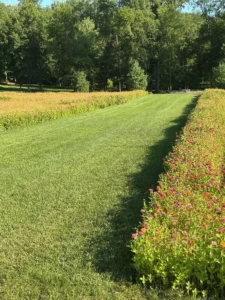
That may mean maintaining a crisp lawn edge around it. It may include a mowed path moving through the meadow. It may frame a view from the house. It could soften the transition between lawn and woodland.
Or it may become part of a larger landscape that includes gardens, an orchard, outdoor living areas, specimen trees, or open acreage.
Even a relatively compact meadow can make a strong visual impact when it is placed correctly. The size of the meadow matters less than how thoughtfully it relates to everything around it.
Meadow Installation Starts With the Property
No two meadow sites are the same. Sun exposure, soil conditions, drainage, existing turf, weeds, invasive plants, slope, access, and surrounding landscape all influence how a meadow should be approached.
Existing vegetation matters too. A healthy lawn behaves differently from a weedy field. A sunny slope behaves differently from a low area that holds moisture. A meadow beside a home may need to feel more refined than one farther out on acreage.
Before recommending a lawn-to-meadow conversion, we want to understand the property first.
That is one of the advantages Kelly Grow brings to meadow installation. Our background in turf and plant management helps us evaluate what is already there before deciding what should happen next.
Site Preparation Matters
The finished meadow is usually what catches everyone’s attention. But much of the success of a meadow is determined before the flowers ever appear.
Proper site preparation is one of the most important parts of professional meadow installation. Existing turf and unwanted vegetation may need to be addressed. Weed pressure needs to be understood. Drainage and soil conditions need to be considered. Access and surrounding landscape may also influence how the area is prepared.
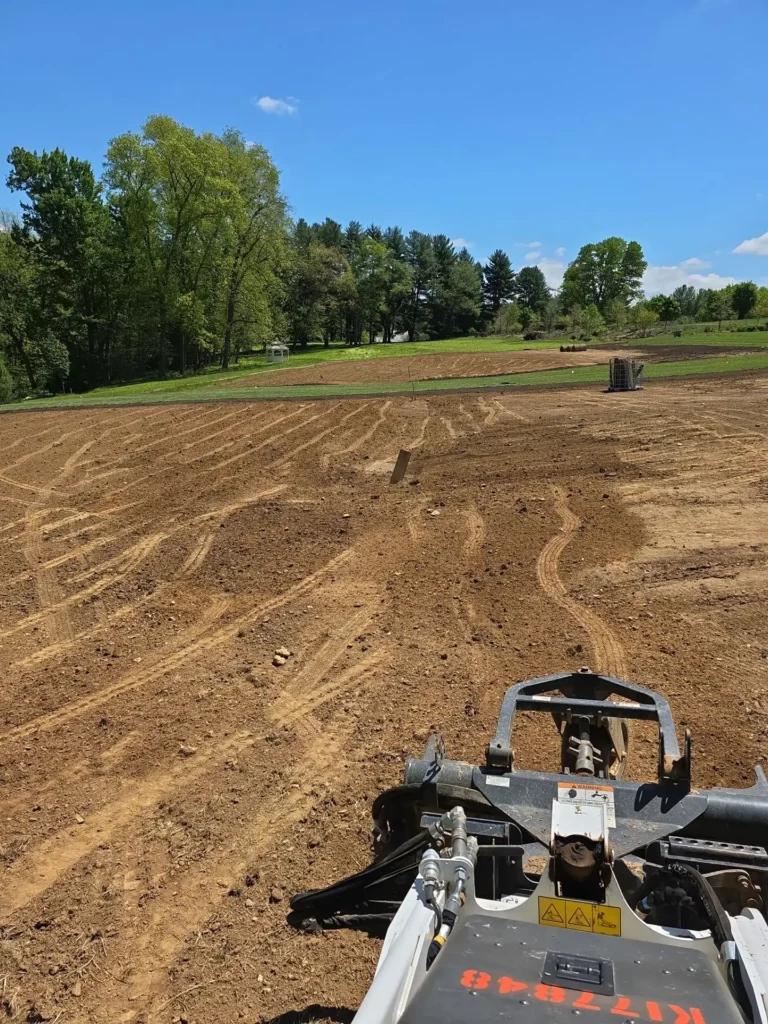
Penn State notes that open, sunny lawn areas can be good candidates for native meadow conversion, but establishment requires planning and can take several years.
This is not the most visible part of the project, but it is one of the most important. A meadow is intended to develop over time, so the decisions made at the beginning can affect how successfully it establishes and how it looks years later.
Not Every Meadow Should Look the Same
One of the things we like most about meadow landscapes is that they can be designed to suit the property.
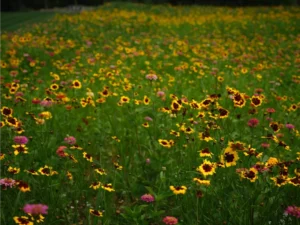
Some homeowners are drawn to sweeping native grasses with subtle seasonal color. Others prefer a meadow with a stronger flowering component. Some properties call for a softer, quieter planting. Others can support something more dramatic.
The architecture of the home matters. The surrounding landscape matters. Views from the house matter. How someone arrives at the property matters.
A meadow near a patio or garden may be handled differently from a meadow along a driveway or at the edge of woodland.
The best meadow doesn’t look like something copied from another property. It looks as though it was always meant to be part of this one.
Native Meadow Installation Adds Another Layer to the Landscape
Native grasses and flowering plants are particularly well suited to creating landscapes that feel connected to the Pennsylvania countryside.
Penn State describes native meadows as mixtures of native grasses and flowers, and Pennsylvania’s DCNR specifically supports converting portions of lawn into meadow habitat.
A native meadow installation can add movement, texture, seasonal interest, and habitat while reducing the amount of property maintained as conventional turf.
But native does not have to mean informal or uncontrolled. A professionally planned native meadow can still have structure.
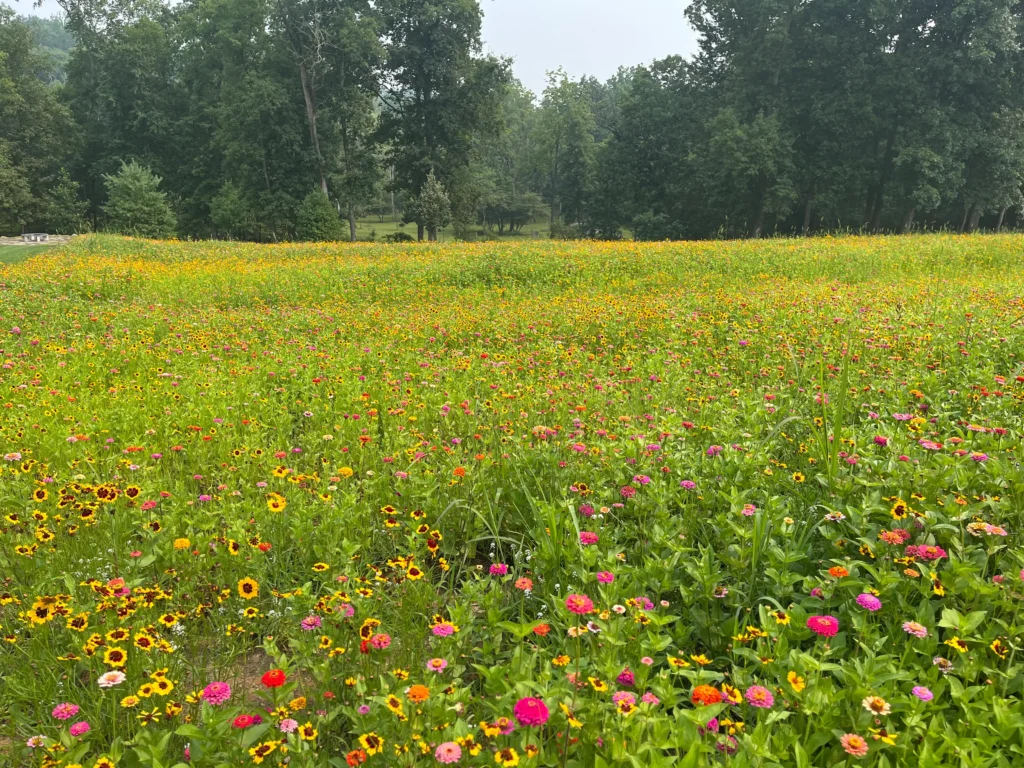
Clean edges can separate meadow from lawn. Mowed paths can create movement through the property. Existing trees can become focal points. Views can be preserved. Meadow areas can also be shaped around other important parts of the landscape.
That balance is what helps a meadow feel refined rather than simply naturalized.
A Meadow Is Not Just an Area We Stop Mowing
This is one of the most important distinctions.
Stopping the mower creates an unmowed area. It does not automatically create a meadow.
Professional meadow installation involves decisions about placement, preparation, plant selection, establishment, edges, access, and long-term management.
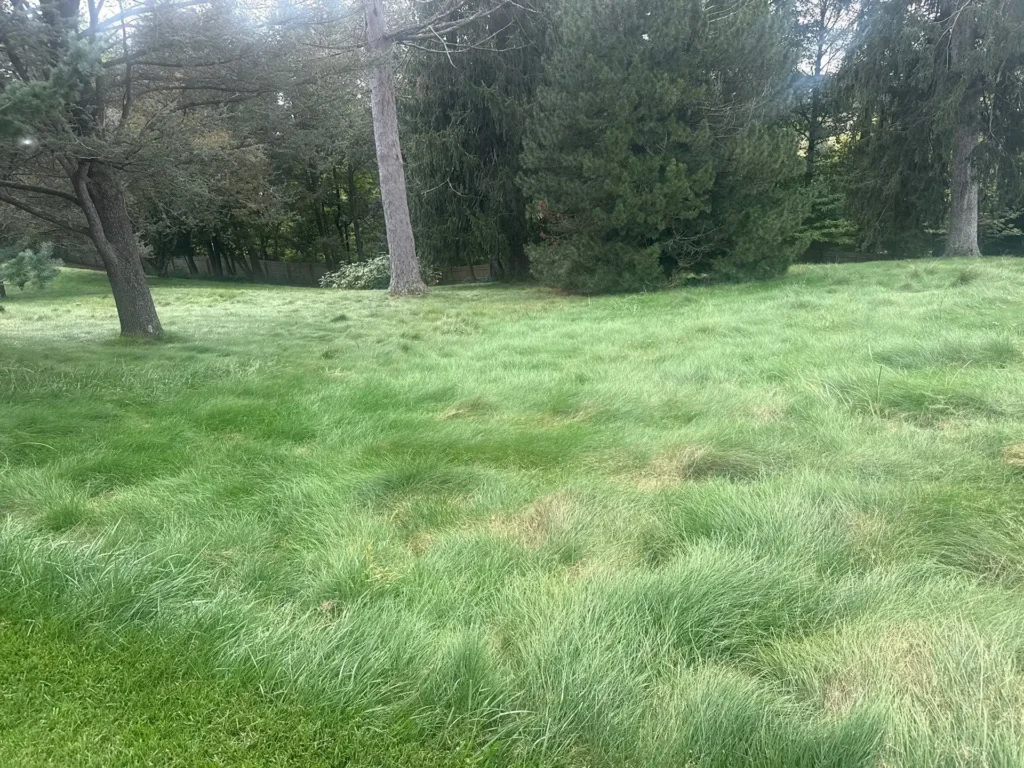
Not every no-mow area needs to become a flowering meadow. In some parts of a property, a naturalized grass or low-mow lawn can create a softer, more relaxed look while reducing the amount of turf that requires regular mowing. These no-mow lawn alternatives can work especially well beneath mature trees, along woodland edges, on gentle slopes, or in areas where a more natural landscape feels appropriate. For homeowners throughout Bucks County and Upper Bucks County, combining maintained lawn, naturalized grass, and meadow areas can create a layered landscape that feels intentional while reducing unnecessary mowing.
For homeowners considering no-mow landscaping, lawn alternatives, or a lawn-to-meadow conversion, that distinction matters.
Homeowners who are still exploring different ways to reduce traditional turf can also read our guide to no-mow lawn alternatives for Bucks County properties.
The goal should not simply be to eliminate lawn care. The goal should be to replace the lawn in the right places with another landscape that adds something to the property.
Meadows Can Work on Properties of Many Sizes
A meadow does not require acres of land.
A smaller property may have one carefully selected area where meadow makes sense. It might be a sunny side yard, a slope that is difficult to mow, a transition along a property line, an area beyond a patio or garden, or a section of lawn that simply is not being used.
On properties with more land, meadow can become a much larger part of the overall landscape. Long driveway approaches, orchard surrounds, woodland edges, open fields, and unused acreage all offer opportunities.
The scale may change. The design principles do not.
The meadow should still feel intentional, connected, and appropriate for the property.
Meadow Establishment Takes Time
A meadow is not an instant landscape.
Perennial meadows generally take two to three years to become fully established, according to Penn State.
Plants establish at different rates. Root systems develop. Grasses begin to fill in. Flowering plants appear at different times. And the balance of the meadow changes as it matures.
This is why we think of meadow installation and meadow establishment as one continuous process.
Installation begins on the landscape. Management helps guide what it becomes.
Long-Term Meadow Management Matters
A meadow may require much less frequent mowing than conventional turf, but it still needs care.
Penn State notes that established native meadows generally require only infrequent cutting, along with periodic management of weeds and invasive species.
During establishment, unwanted vegetation needs to be monitored. As the meadow matures, periodic cutting helps control woody growth and supports the intended plant community.
Conditions can change over time. Some species become stronger. Others may need attention.
This is where Kelly Grow’s broader experience in turf, plants, soil, and long-term property care becomes important.
We are not interested in simply putting something in the ground and walking away. We want to understand how the landscape will develop.
Meadows Can Change the Arrival to a Property
On some properties, the landscape begins well before someone reaches the house.
A driveway, entrance, fence line, field, or woodland edge can all become part of the arrival experience. Meadow planting can soften these areas and make the transition toward the home feel much more interesting.
On a smaller property, the same principle can apply on a different scale. A meadow may soften the edge of a driveway, frame an entrance, create interest along a walkway, or become a beautiful backdrop beyond a maintained lawn.
The scale changes, but the experience still matters.
Meadows and Orchards Work Beautifully Together
We particularly like the relationship between meadow areas and home orchards. An orchard already brings a more natural, agricultural feeling to a property. Meadow planting can soften the landscape around fruit trees while maintained paths and lawn provide access where it is needed.
For homeowners considering adding an orchard as part of a larger landscape, PLANT Design Group has additional resources on designing and planting home orchards in Bucks County.
Whether the orchard contains a handful of trees or becomes a more significant part of the property, the meadow can help connect it visually to the surrounding landscape.
Where Does Meadow Installation Make Sense?
Some of the opportunities we often see include:
- unused lawn areas
- sunny slopes
- areas along driveways
- property boundaries
- orchard surrounds
- woodland edges
- fields and open acreage
- spaces beyond patios or gardens
- transitions between manicured and natural areas
But meadow is not automatically the right answer everywhere.
Some areas should remain lawn. Others may be better suited to trees, gardens, woodland planting, or other landscape treatments.
That is why we prefer to begin with the property rather than with a predetermined solution.
Less Lawn Can Sometimes Mean More Landscape
Reducing lawn does not necessarily mean doing less with a property.
In many cases, it means creating more interest, more texture, more movement, more seasonal change, more contrast, and more connection between the home and the land around it.
A beautiful lawn still has an important place in many landscapes. So does a meadow.
The goal is knowing where each belongs.
Meadow Installation in Bucks County and Upper Bucks County
At Kelly Grow Turf & Plant Management, we understand healthy, beautiful turf. That experience also helps us recognize the places where another type of landscape may serve the property better.
For homeowners throughout Bucks County and Upper Bucks County, we can evaluate existing lawn areas and determine where a professionally planned meadow installation, native meadow, or lawn-to-meadow conversion could improve the way the property looks, functions, and develops over time.
That may mean transforming one carefully chosen section of lawn. Or it may mean creating meadow areas across a much larger property.
Either way, the approach should begin with the same question:
What makes the most sense for this property?
A meadow should never feel like an afterthought. Done well, it becomes part of the landscape itself.