
A Better Spring Lawn Starts in the Fall
After a hot Pennsylvania summer, it’s common for lawns to look thin, patchy, or stressed. Heat, drought, heavy rain, humidity, disease, and compacted soil can all take a toll on turf.
Fall gives cool-season lawns an opportunity to recover from summer stress and establish new grass before winter. The combination of warm soil, cooler air, and declining weed pressure can create favorable conditions for germination and early growth, something supported by turfgrass guidance from Penn State Extension and Rutgers.
When Should You Aerate and Seed?
For Bucks County lawns, the Kelly Grow experts generally recommend late August through mid-October for fall aeration and seeding.
Timing matters because new grass needs an opportunity to germinate and begin developing roots before colder temperatures significantly slow growth. Weather and soil temperatures can vary from year to year, so conditions during this window also play an important role in establishment.
Kelly Grow Expert Tip: Fall seeding season is relatively short. Planning ahead helps make sure your lawn is seeded while conditions are still favorable for establishment.
Why Is Fall the Best Time to Seed?

Warm Soil + Cooler Air
Although air temperatures begin cooling in the fall, the soil still holds warmth from summer. This combination supports germination while reducing the intense heat stress young grass can experience during the summer months.
Less Weed Competition
By early fall, pressure from aggressive summer weeds such as crabgrass begins to decline.
Rutgers Extension notes reduced weed competition as one of the advantages of late-summer and early-fall seeding. With less competition, desirable turfgrass has a better opportunity to establish and fill thin areas.
A thicker lawn can also help reduce the open areas where weeds have an opportunity to grow.
More Time Before Summer Stress
Grass established in the fall has an opportunity to grow before winter and then continue developing the following spring before facing another Pennsylvania summer.
That’s why the Kelly Grow experts consider fall seeding an investment in next year’s lawn, not simply a way to improve how the lawn looks this fall.
Why Aerate Before Overseeding?
Core aeration removes small plugs of soil from the lawn, helping relieve compaction and creating openings through the turf and into the soil.
Aeration can help improve the movement of water, oxygen, and nutrients into the soil while providing more room for developing turfgrass roots.
Those openings can also improve seed-to-soil contact, which is important for successful germination.
Kelly Grow commonly recommends aeration and overseeding for lawns that are thin, compacted, heavily used, or showing bare and damaged areas.
Overseeding vs. Lawn Renovation
Not every struggling lawn needs the same amount of work.
Overseeding is a good option when desirable grass is still present but the lawn has become thin, stressed, or uneven.
More extensive lawn renovation may make sense when there are larger problems, such as:
- Significant bare areas
- Severe summer damage
- Heavy weed pressure
- Poor-quality existing turf
- Disease-related thinning
- Construction damage
- Drainage or soil problems
Kelly Grow Expert Tip: Adding seed won’t always fix the underlying reason a lawn is struggling. Compaction, shade, drainage, watering, disease, and soil conditions can all affect turf performance.
Quality Grass Seed Matters
Successful overseeding isn’t just about putting down more seed. The quality and varieties of grass being planted matter too.
Penn State Extension identifies proper seed selection as an important part of successful turfgrass establishment. Rutgers turfgrass researchers also study and evaluate turfgrass varieties for characteristics such as density, color, disease resistance, and overall performance.
Kelly Grow uses a premium custom seed mixture selected for density, appearance, durability, and performance under local growing conditions.
Combining quality seed with proper application and good seed-to-soil contact gives new turf a better opportunity to establish successfully.
Caring for Your Lawn After Seeding
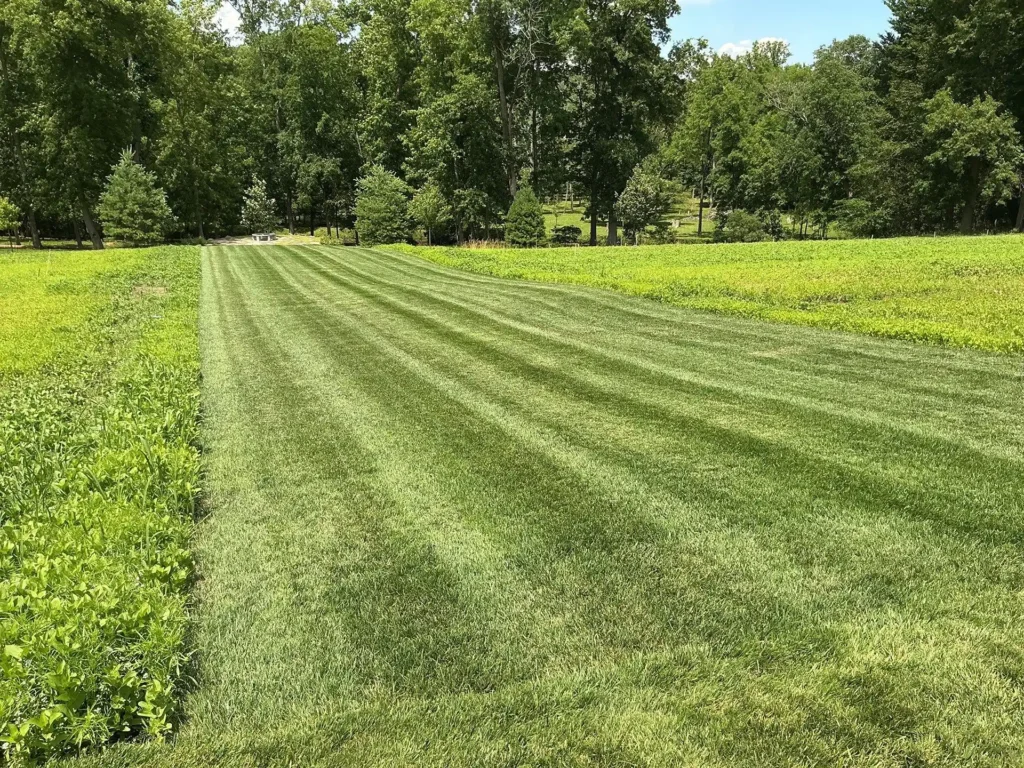
Watering is one of the most important parts of a successful establishment.
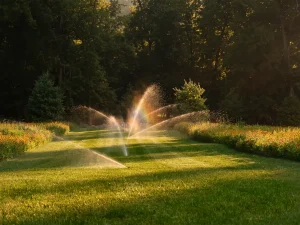
During germination, newly seeded areas should remain consistently moist without becoming saturated. Light, frequent watering is generally appropriate at first, followed by deeper and less frequent watering as the new grass develops.
Homeowners should also:
- Avoid letting newly seeded areas completely dry out
- Prevent puddling and excessive runoff
- Limit traffic on newly seeded areas
- Avoid mowing before the new grass is ready
- Continue recommended lawn care after establishment
And remember to be patient. Different grass varieties germinate at different rates, so a newly seeded lawn won’t necessarily fill in all at once.
Get Your Lawn Ready for Next Spring
One of the most important things the Kelly Grow experts want Bucks County homeowners to remember is this:
Some of the best spring lawns get their start the previous fall.
Fall aeration and seeding can help repair summer damage, improve turf density, relieve compaction, and establish stronger grass before another summer arrives.
Kelly Grow Turf provides professional core aeration, overseeding, and lawn renovation throughout Bucks County, Pennsylvania.
Because the fall seeding season is limited, appointments can fill quickly.
Give your lawn a stronger start for next spring. Request your free fall aeration and seeding estimate from Kelly Grow Turf today.
Send us an email: info@kellygrowturf.com
Works Cited
Penn State Extension. “Lawn Establishment.” Penn State College of Agricultural Sciences, Extension.
https://extension.psu.edu/lawn-establishment
Penn State Extension. “Lawn Management Through the Seasons.” Penn State College of Agricultural Sciences, Extension.
https://extension.psu.edu/lawn-management-through-the-seasons
Penn State Extension. “Turfgrass Seed and Seed Mixtures.” Penn State College of Agricultural Sciences, Extension.
https://extension.psu.edu/turfgrass-seed-and-seed-mixtures
Rutgers New Jersey Agricultural Experiment Station (NJAES). “Seeding Your Lawn.” Rutgers Cooperative Extension.
https://njaes.rutgers.edu/fs584/
Rutgers Center for Turfgrass Science. Rutgers University.
https://turf.rutgers.edu/