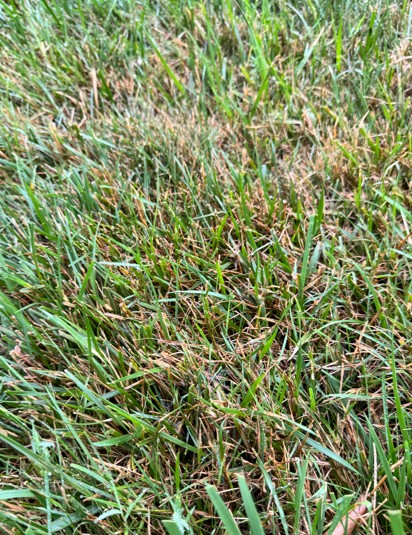
As spring transitions into summer, homeowners throughout Bucks County and Montgomery County begin enjoying greener lawns, warmer temperatures, and more time outdoors. Unfortunately, the same weather conditions that encourage grass to grow also create the perfect environment for damaging lawn diseases.
Hot days, warm nights, high humidity, and frequent rainfall can quickly turn a beautiful lawn into one covered with brown patches, thinning turf, and unhealthy grass. Every summer, homeowners ask the same question:
“What’s causing these brown spots in my lawn?”
In many cases, the answer is lawn fungus.
At Kelly Grow Turf and Plant Management, we believe the best way to protect your lawn isn’t waiting for disease to appear; it’s preventing it before it starts. Through proper turf management, healthy soil practices, and preventative fungicide applications when conditions warrant, homeowners can significantly reduce the risk of serious lawn disease.
What Is Lawn Fungus?
Many homeowners are surprised to learn that fungi naturally exist in almost every lawn.
Under normal conditions these fungi remain inactive and harmless. However, when weather conditions become favorable, fungal pathogens begin multiplying rapidly and attacking grass plants.
Unlike insects or weeds, fungal diseases often develop silently beneath the surface before visible symptoms appear.
By the time homeowners notice large brown patches, the disease has frequently been active for several days or even weeks.
According to Penn State Extension, extended periods of leaf wetness combined with warm temperatures and high humidity create ideal conditions for many common turfgrass diseases.
Why Pennsylvania Lawns Are Susceptible to Summer Diseases
Pennsylvania’s climate is ideal for cool-season grasses like Kentucky bluegrass, perennial ryegrass, and tall fescue.
Unfortunately, it’s also ideal for many turf diseases.
Several environmental conditions contribute to disease development:
- Warm nighttime temperatures
- High humidity
- Heavy morning dew
- Frequent summer thunderstorms
- Poor air circulation
- Compacted soils
- Heat stress
- Extended leaf wetness
These conditions allow fungal spores to spread quickly through otherwise healthy turf.
While homeowners often assume they caused the problem, lawn disease is frequently the result of environmental conditions beyond anyone’s control.
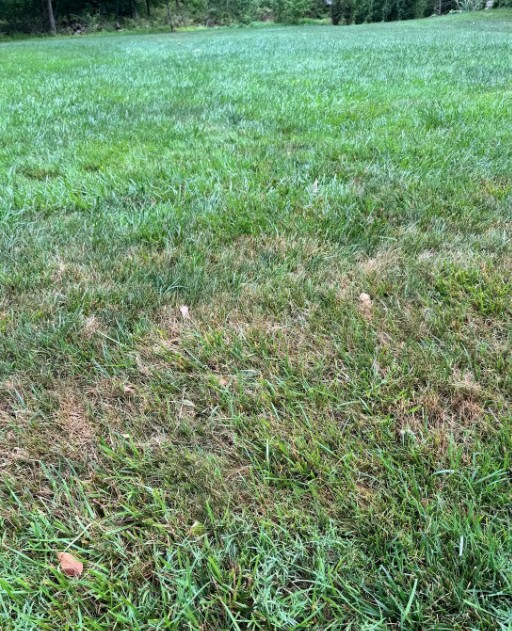
Why Some Bucks County Lawns Get More Fungus Than Others
One of the most common questions we hear is:
“Why does my lawn get fungus every year while my neighbor’s lawn looks perfectly healthy?”
The answer often comes down to microclimates.
Not every property experiences the same environmental conditions. Homes located in valleys, near streams, surrounded by mature trees, or in shaded neighborhoods often stay damp longer than open properties.
Morning dew may remain on the grass for several additional hours, extending leaf wetness and creating favorable conditions for fungal diseases.
Throughout Bucks County, properties located near the Delaware River, Neshaminy Creek, Tohickon Creek, Pennypack Creek, and Unami Creek often experience higher humidity and reduced airflow.
Communities such as New Hope, Solebury, Yardley, Washington Crossing, Upper Makefield, Lower Makefield, Buckingham, Doylestown Township, Ivyland, and Southampton frequently experience these localized conditions.
This doesn’t mean disease is inevitable; it simply means preventative management becomes even more important.
Common Lawn Diseases We See in Bucks County
Brown Patch
Brown Patch is one of the most common summer diseases affecting cool-season lawns.
Symptoms include:
- Large circular brown patches
- Gray “smoke ring” borders during humid mornings
- Rapid spread during hot, humid weather
- Thinning turf
Brown Patch is most active when nighttime temperatures remain above 65°F.
Dollar Spot
Dollar Spot creates numerous straw-colored patches approximately the size of a silver dollar.
Without treatment, these small spots often merge together into larger damaged areas.
Lawns under fertility stress are particularly susceptible.
Red Thread
Red Thread commonly develops during cool, damp weather.
Homeowners may notice:
- Pink or reddish threads extending from grass blades
- Light brown patches
- Thin turf
Although rarely fatal, Red Thread significantly affects lawn appearance.
Leaf Spot
Leaf Spot attacks individual grass blades before progressing deeper into the plant.
Symptoms include:
- Purple or brown lesions
- Yellowing grass
- Overall thinning
Without proper management, weakened turf becomes more vulnerable to additional diseases and weed invasion.
Pythium Blight
Pythium Blight is one of the fastest-moving turf diseases.
It develops rapidly during:
- High humidity
- Poor drainage
- Standing water
- Warm nights
Entire sections of lawn can decline within days if favorable conditions persist.
Why Preventative Fungicide Treatments Work Best
One of the biggest misconceptions about fungicides is that they repair damaged grass.
Unfortunately, once disease destroys a grass blade, that tissue cannot be restored.
Instead, fungicides work by protecting healthy grass from becoming infected.
Think of fungicides like wearing a raincoat before walking into a storm. They help protect what’s healthy rather than repairing damage afterward.
For this reason, preventative fungicide applications consistently provide better results than waiting until disease symptoms become visible.
Kelly Grow’s Preventative Lawn Disease Control Program
Our Preventative Lawn Disease Control Package is designed specifically for Pennsylvania’s summer growing conditions.
The program includes monthly preventative fungicide applications from May through August, helping reduce disease pressure during the months when lawns are most vulnerable.
Our preventative program targets common diseases including:
- Brown Patch
- Dollar Spot
- Red Thread
- Leaf Spot
- Pythium
Preventative fungicides work best when applied before extensive disease development, allowing healthy turf to continue growing while reducing the risk of widespread damage.
Healthy Soil Creates Healthier Lawns
Disease prevention starts below the surface.
Healthy soils support:
- Stronger root systems
- Improved nutrient availability
- Better moisture management
- Increased microbial activity
- Greater stress tolerance
Kelly Grow Turf and Plant Management incorporates soil-building practices into our comprehensive turf management programs to improve long-term lawn health.
Healthy lawns naturally tolerate disease better than stressed lawns.
Aeration and Overseeding Improve Disease Resistance
Even the best fungicide program performs better when paired with healthy turf.
Core aeration reduces soil compaction while improving air movement, water infiltration, and root growth.
Fall overseeding introduces newer turfgrass varieties selected for improved disease resistance, drought tolerance, and overall performance.
If your lawn experienced disease damage this summer, aeration and overseeding can help strengthen it for future seasons.
Proper Lawn Care Helps Reduce Disease Pressure
In addition to preventative fungicide applications, homeowners can reduce lawn disease by following a few simple practices:
- Water deeply and infrequently
- Irrigate early in the morning
- Avoid watering at night
- Mow with sharp blades
- Follow recommended mowing heights
- Avoid excessive nitrogen applications
- Improve drainage where possible
- Reduce soil compaction through aeration
These cultural practices work together with preventative fungicides to create healthier turf.
Common Fungicide Myths
Myth: Fungicide will make brown grass green again.
Fact: Fungicides prevent new infections but cannot repair dead grass blades.
Myth: Lawn disease only affects neglected lawns.
Fact: Even professionally maintained golf courses and athletic fields develop disease under favorable weather conditions.
Myth: More fungicide always provides better protection.
Fact: Fungicides should always be applied according to label directions and as part of a balanced turf management program.
Myth: Watering every day keeps lawns healthier.
Fact: Frequent shallow watering often increases disease pressure by extending leaf wetness.
Frequently Asked Questions
When should fungicide applications begin?
Preventative applications typically begin in May before disease pressure increases and continue monthly through August.
Can lawn fungus spread?
Yes. Many fungal diseases spread through spores carried by wind, rain, mowing equipment, and foot traffic.
Is fungicide safe for my family and pets?
Professional products are applied according to EPA-approved label directions. Once the product has dried and the recommended re-entry period has passed, treated lawns are generally safe for normal use.
Will my lawn recover after fungus?
Most lawns recover with proper management, healthy growing conditions, and time. Severely damaged areas may benefit from fall overseeding.
Do all lawns need preventative fungicide treatments?
Not always. Lawns with recurring disease, heavy shade, poor airflow, high humidity, or properties located near creeks, rivers, and wooded areas often benefit the most.
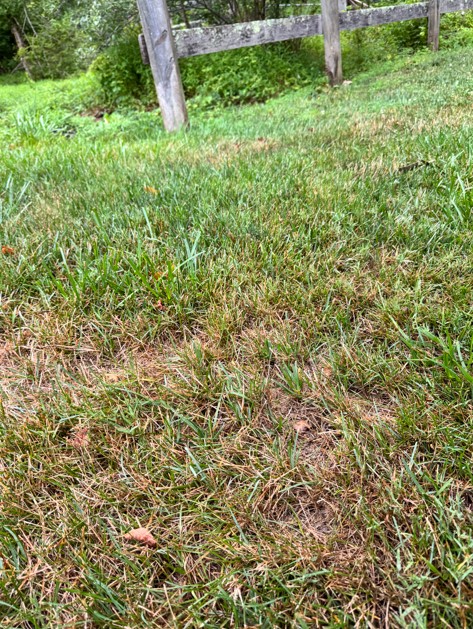
Protect Your Lawn Before Disease Strikes
Summer lawn diseases can develop quickly, especially during periods of prolonged humidity and rainfall.
Rather than waiting for brown patches to appear, a proactive approach can help protect your lawn and preserve its health throughout the growing season.
At Kelly Grow Turf and Plant Management, we combine science-based turf management with local knowledge of Bucks County’s growing conditions to help homeowners build healthier, more resilient lawns.
Whether your home is in Warminster, Doylestown, Newtown, Yardley, Richboro, Warrington, New Hope, Blue Bell, Ambler, or Princeton, our team is here to help you protect your investment with professional lawn care tailored to your property’s unique needs.
Request a Preventative Lawn Disease Evaluation
If your lawn has experienced recurring summer disease—or you want to prevent problems before they start—Kelly Grow Turf and Plant Management can help.
Kelly Grow Turf and Plant Management
1775 Stout Drive, Unit A
Warminster, PA 18974
Phone: 267.962.6527
Email: info@kellygrowturf.com
Website: https://kellygrowturf.com/
Get an Instant Quote:
https://kellygrowturf.com/instant-quote/
Works Cited
- Penn State Extension. Managing Turfgrass Diseases. https://extension.psu.edu/managing-turfgrass-diseases
- Penn State Extension. Brown Patch (Rhizoctonia solani). https://extension.psu.edu/turfgrass-diseases-brown-patch-causal-fungus-rhizoctonia-solani
- Penn State Extension. Dollar Spot (Clarireedia jacksonii). https://extension.psu.edu/turfgrass-diseases-dollar-spot-causal-fungus-clarireedia-jacksonii
- Rutgers Center for Turfgrass Science. https://turf.rutgers.edu
- Delaware Valley University, Turf Management Program. https://www.delval.edu
- University of Maryland Extension. https://extension.umd.edu
- National Turfgrass Evaluation Program (NTEP). https://www.ntep.org
- Golf Course Superintendents Association of America (GCSAA). https://www.gcsaa.org
- Sports Field Management Association (SFMA). https://www.sportsfieldmanagement.org
- Fisher & Son, Inc. https://www.fisherandson.com
- Syngenta GreenCast®. https://www.greencastonline.com
- Bayer Environmental Science. https://www.environmentalscience.bayer.us
- U.S. Environmental Protection Agency. Integrated Pest Management (IPM). https://www.epa.gov/safepestcontrol/integrated-pest-management-ipm-principles