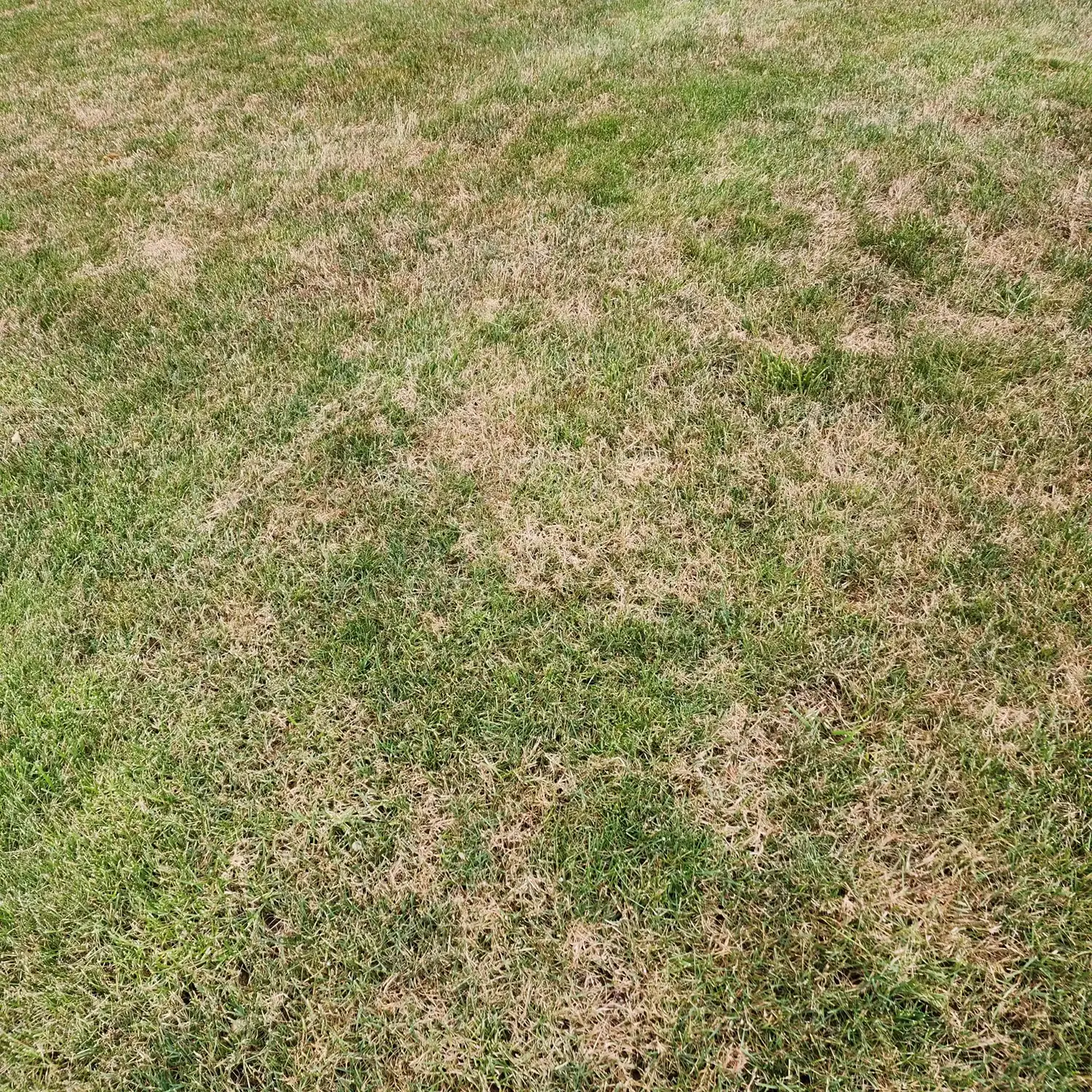
Brown Patches, Thinning Turf, and Drought Stress Are Increasing Across Southeastern Pennsylvania
Protect Your Lawn Before Summer Stress Causes Long-Term Damage
Call Kelly Grow Turf and Plant Management at 267.962.6527
Or Get an Instant Quote Using Our Self Lawn Measuring Tool:
https://kellygrowturf.com/instant-quote/
As we move deeper into summer, homeowners throughout Bucks County and Montgomery County are beginning to see the effects of prolonged dry weather on their lawns and landscapes.
Despite a few scattered thunderstorms, our region continues to experience below-average rainfall combined with increasing temperatures. These conditions are placing significant stress on cool-season lawns, trees, shrubs, and ornamental plantings throughout Doylestown, Newtown, Yardley, Warrington, Richboro, Warminster, Blue Bell, Ambler, and surrounding communities.
Many homeowners are noticing:
- Brown patches developing in the lawn
- Thinning turf
- Discoloration and loss of density
- Wilting shrubs and ornamental plants
- Increased weed pressure
- Areas of turf that appear dormant
The good news is that proactive watering, proper mowing practices, and efficient irrigation management can significantly reduce the risk of long-term damage.
Why Lawns Are Struggling Right Now
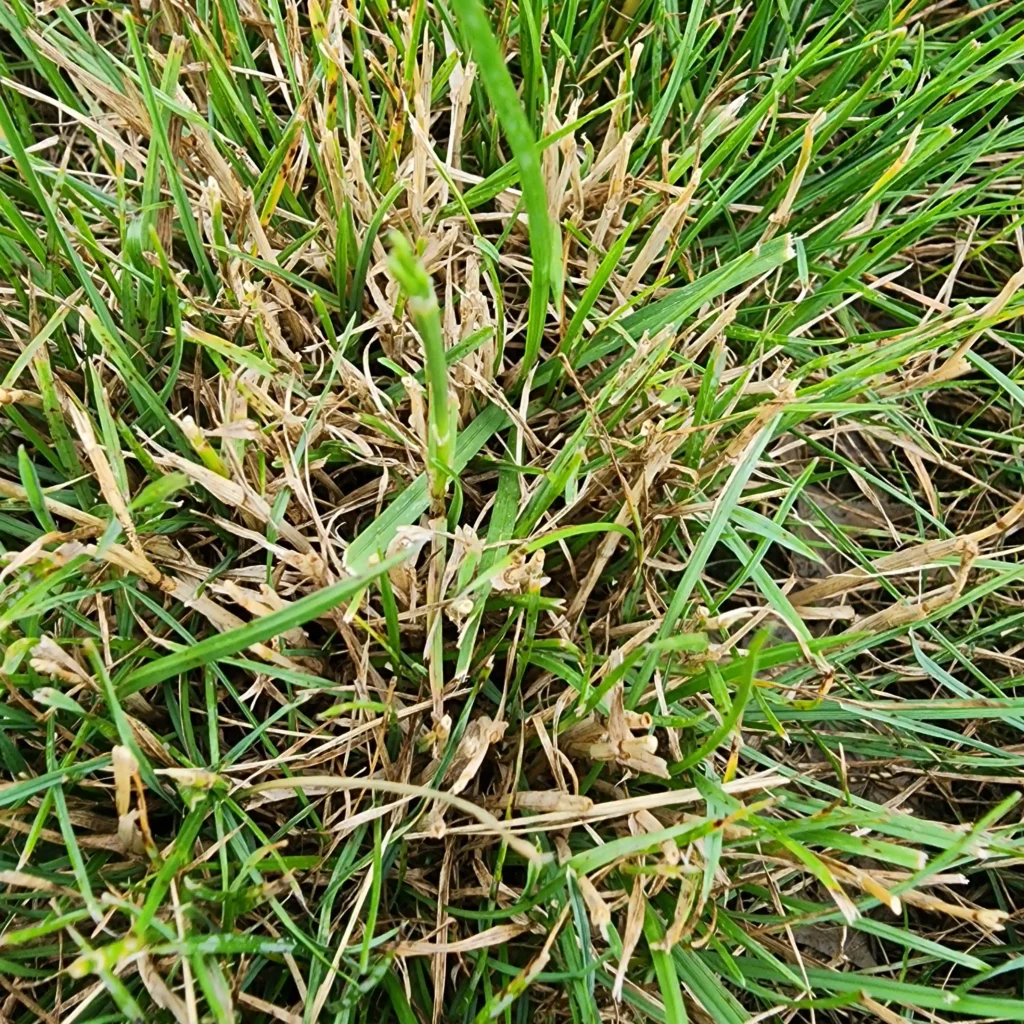
Most lawns in Pennsylvania consist primarily of cool-season turfgrasses such as Tall Fescue, Kentucky Bluegrass, and Perennial Ryegrass.
These grasses thrive during spring and fall when temperatures are moderate and soil moisture is plentiful. However, prolonged heat and drought conditions can place these grasses under significant stress.
According to Penn State Extension, cool-season turfgrass growth slows dramatically during periods of high temperatures and moisture deficiency. As a survival mechanism, turf may enter dormancy, resulting in brown or straw-colored lawns that appear unhealthy but are attempting to conserve energy.
When drought conditions persist:
- Root systems struggle to absorb adequate moisture
- Turf density decreases
- Grass becomes more susceptible to weed invasion
- Recovery becomes slower and more difficult
- Overall lawn quality declines
Dormancy can help grass survive short periods of drought, but prolonged stress may lead to thinning turf and longer recovery periods once rainfall returns.
Common Signs of Lawn Drought Stress
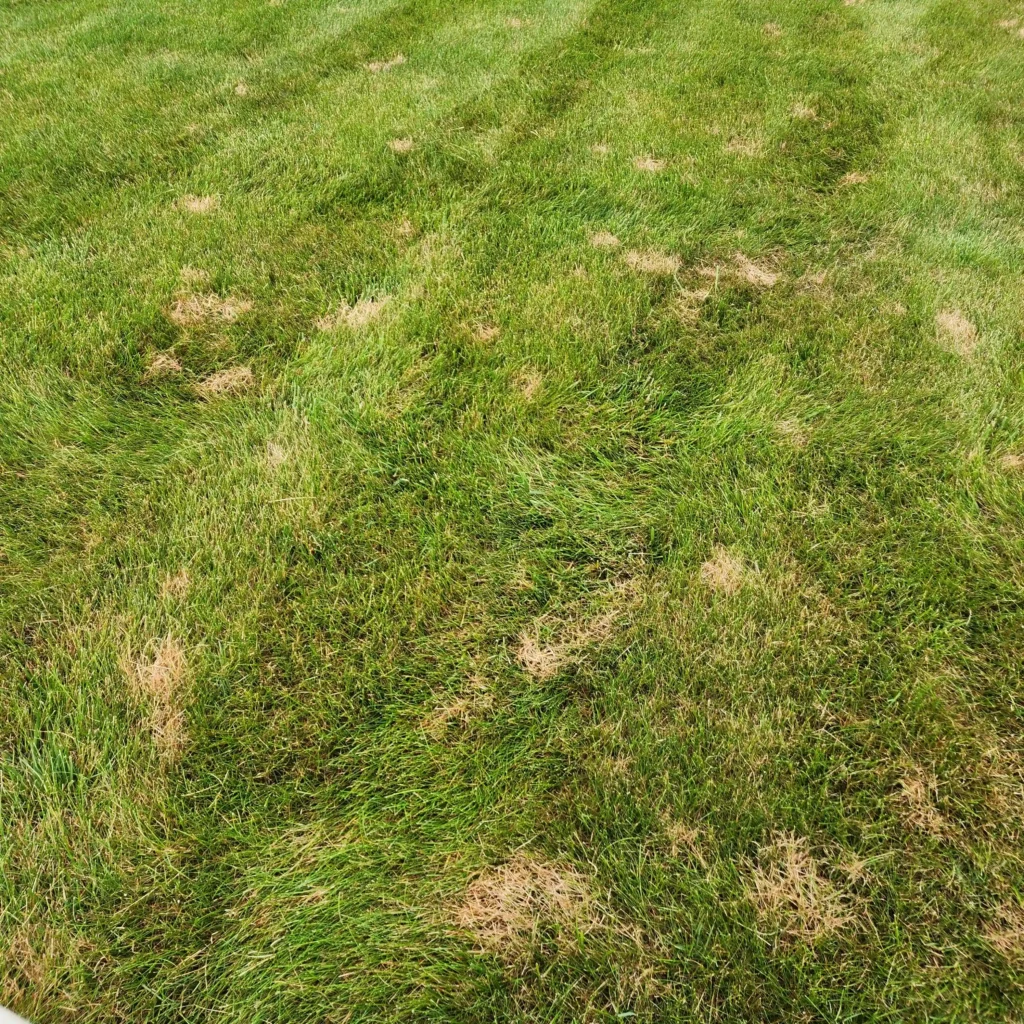
Homeowners throughout Bucks County frequently report:
- Brown patches throughout the lawn
- Thinning turf
- Footprints remaining visible after walking across the grass
- Bluish-gray discoloration
- Slower growth
- Reduced lawn density
One simple way to identify drought stress is the footprint test. If footprints remain visible for several minutes after walking across the lawn, the grass likely needs additional moisture.
Proper Watering Is the Most Important Thing You Can Do Right Now
During periods of drought stress, proper irrigation becomes critical to maintaining a healthy lawn.
According to Penn State Extension, most cool-season lawns require approximately 1 to 1.5 inches of water per week through rainfall or irrigation.
Deep, infrequent watering encourages deeper root growth and improves drought tolerance over time.
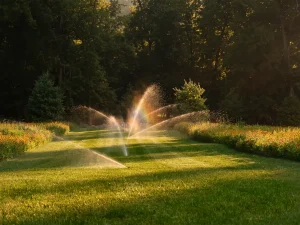
If You Have an Irrigation System
We recommend:
- Watering at least two days per week
- Running each irrigation zone for approximately 30 minutes per cycle
- Watering early in the morning whenever possible
Morning irrigation reduces evaporation and allows moisture to penetrate the soil before daytime temperatures increase.
If You Do Not Have an Irrigation System
You can still effectively maintain your lawn using a hose-end sprinkler.
We recommend:
- Deep watering at least once per week
- Applying approximately one hour of water per area
- Moving sprinklers as needed to ensure complete coverage
- Watering during the early morning hours whenever possible
The goal is to soak the soil deeply rather than applying small amounts of water every day. Deep watering encourages roots to grow further into the soil, helping your lawn become more drought-tolerant over time.
Adjust Your Mowing Practices During Drought
One of the most overlooked causes of additional lawn stress during the summer is mowing.
When temperatures are high and moisture is limited, mowing places additional stress on turfgrass that is already struggling to survive.
To reduce stress during drought conditions:
- Avoid mowing during the hottest part of the day
- Mow during the morning or evening when temperatures are cooler
- Keep mower blades sharp
- Follow the one-third rule and never remove more than one-third of the grass blade at a time
- Bag and remove excessive grass clippings, especially when clippings are long or clumping on the lawn
Cutting grass during extreme afternoon heat can increase moisture loss and place additional strain on already stressed turf.
During periods of heat, humidity, and increased disease pressure, excessive grass clippings left on the lawn can trap moisture and reduce airflow around the turf canopy. If clippings are long, wet, or clumped together after mowing, we recommend bagging and removing them to help reduce favorable conditions for lawn diseases and improve overall turf appearance.
Consider Reducing Mowing Frequency
Many homeowners feel compelled to mow every week regardless of conditions. During drought conditions, however, less mowing is often better.
If your lawn is growing slowly because of heat and lack of moisture, there may be little benefit to mowing simply because it is “mowing day.”
During periods of severe drought:
- Reduce mowing frequency when possible
- Avoid unnecessary traffic on stressed turf
- Limit foot traffic across brown or drought-stressed areas
- Keep equipment off the lawn when conditions are extremely dry
The less stress you place on drought-affected turf, the better its chances of recovery once rainfall returns.
Think of your lawn as being in survival mode. Every pass with a mower, every footstep, and every piece of equipment traveling across the turf can add additional stress. During drought conditions, the goal is to preserve plant health until environmental conditions improve.
Is Your Irrigation System Performing Properly?
Many lawn problems that appear to be drought stress are actually the result of irrigation systems that are not operating efficiently.
Common irrigation issues include:
- Broken or clogged sprinkler heads
- Uneven coverage patterns
- Incorrect watering schedules
- Leaks and pressure issues
- Misaligned spray zones
- Outdated controllers that waste water
Even a professionally installed irrigation system should be inspected periodically to ensure your lawn and landscape are receiving consistent coverage during periods of drought.
Proper irrigation management is especially important during the hot summer months when water availability directly impacts turf health, root development, and overall landscape performance.
At Kelly Grow Turf and Plant Management, we offer professional irrigation installation, irrigation system inspections, repairs, upgrades, seasonal startup services, winterization services, and water-efficient system improvements designed to help homeowners maintain healthier lawns while using water more effectively.
Don’t Forget About Your Trees, Shrubs, and Landscape Beds
Many homeowners focus exclusively on their lawn while overlooking trees and ornamental plantings.
Trees and shrubs often show drought stress later than turfgrass, but the long-term consequences can be much more severe.
Pay special attention to:
- Newly planted trees
- Young shrubs
- Foundation plantings
- Ornamental trees
- Landscape beds in full sun
The Arbor Day Foundation recommends supplemental watering during prolonged dry periods, particularly for newly established plant material whose root systems have not fully developed.
Signs of drought stress include:
- Wilting leaves
- Leaf scorch
- Premature leaf drop
- Branch dieback
- Reduced flowering
Proper watering now can prevent lasting damage that may take years to correct.
How Plant Health Care Can Help
Healthy plants are better equipped to withstand environmental stress.
Kelly Grow Turf and Plant Management offers Plant Health Care Programs designed to strengthen trees and shrubs through seasonal monitoring, soil health improvements, targeted pest management, and organic soil treatments that support long-term landscape vitality. These programs help improve plant resilience while reducing stress-related decline.
Signs Your Lawn May Need Professional Attention
Contact a lawn care professional if you notice:
- Large brown areas expanding rapidly
- Areas that fail to recover after watering
- Significant thinning of previously healthy turf
- Increased weed pressure following drought stress
- Irrigation coverage concerns
- Declining shrubs or ornamental plants
Early diagnosis often prevents more extensive damage and costly repairs.
Protect Your Landscape Investment This Summer
Summer weather in Southeastern Pennsylvania can be unpredictable, but proper watering, efficient irrigation, responsible mowing practices, and proactive plant care remain the most effective strategies for maintaining a healthy lawn and landscape throughout the summer season.
At Kelly Grow Turf and Plant Management, we help homeowners throughout Bucks County and Montgomery County maintain healthier lawns and landscapes through professional:
- Turf Management Programs
- Lawn Fertilization
- Weed Control
- Plant Health Care Programs
- Irrigation Installation
- Irrigation Repairs and Service
- Seasonal Irrigation Startup and Winterization
- Aeration and Overseeding
Whether you’re dealing with drought stress, irrigation issues, or declining landscape health, our team can develop a customized program tailored to your property’s needs.
Schedule Your Summer Lawn Evaluation
Call Today
📞 267.962.6527
📧 info@kellygrowturf.com
Get an Instant Quote
Use our Self Lawn Measuring Tool:
https://kellygrowturf.com/instant-quote/
Or request a consultation:
https://kellygrowturf.com/
Healthy lawns don’t happen by accident. They happen when the right treatments are applied at the right time.
Frequently Asked Questions
How much water does my lawn need during a drought?
Most cool-season lawns require approximately 1 to 1.5 inches of water per week from rainfall or irrigation.
What causes brown patches during summer?
Brown patches are commonly caused by drought stress, inadequate irrigation coverage, environmental stress, or lawn disease.
What is the best time to water my lawn?
Early morning is the best time because it reduces evaporation and allows water to penetrate the soil more effectively.
Should I continue mowing during a drought?
Yes, but mowing frequency should be reduced when possible. Avoid mowing during the hottest part of the day and minimize traffic on stressed turf.
Do trees and shrubs need extra water during dry weather?
Yes. Newly planted trees and shrubs are especially vulnerable and often require supplemental watering during prolonged drought conditions.
Should I bag grass clippings during the summer?
If clippings are long, wet, or clumping together, they should be bagged and removed to improve airflow and reduce favorable conditions for disease development.
Should I install an irrigation system for my lawn?
An irrigation system can provide more consistent and efficient watering than manual sprinklers, especially during periods of drought. Properly designed systems help ensure even coverage, healthier root development, improved turf quality, and more efficient water use.
Sources & References
Penn State Extension – Managing Turfgrass During Drought Conditions
Arbor Day Foundation – Tree Watering and Drought Stress Resources
About Kelly Grow Turf and Plant Management
Kelly Grow Turf and Plant Management provides professional turf management, lawn fertilization, weed control, plant health care, irrigation installation, irrigation repair, irrigation maintenance, aeration, and overseeding services throughout Bucks County and Montgomery County, Pennsylvania.
Kelly Grow Turf and Plant Management
1775 Stout Drive, Unit A
Warminster, PA 18974
Phone: 267.962.6527
Email: info@kellygrowturf.com
Website: https://kellygrowturf.com/ Our comprehensive lawn care programs focus on soil health, sustainable turf management, efficient irrigation practices, and environmentally responsible lawn care solutions designed specifically for Southeastern Pennsylvania properties.