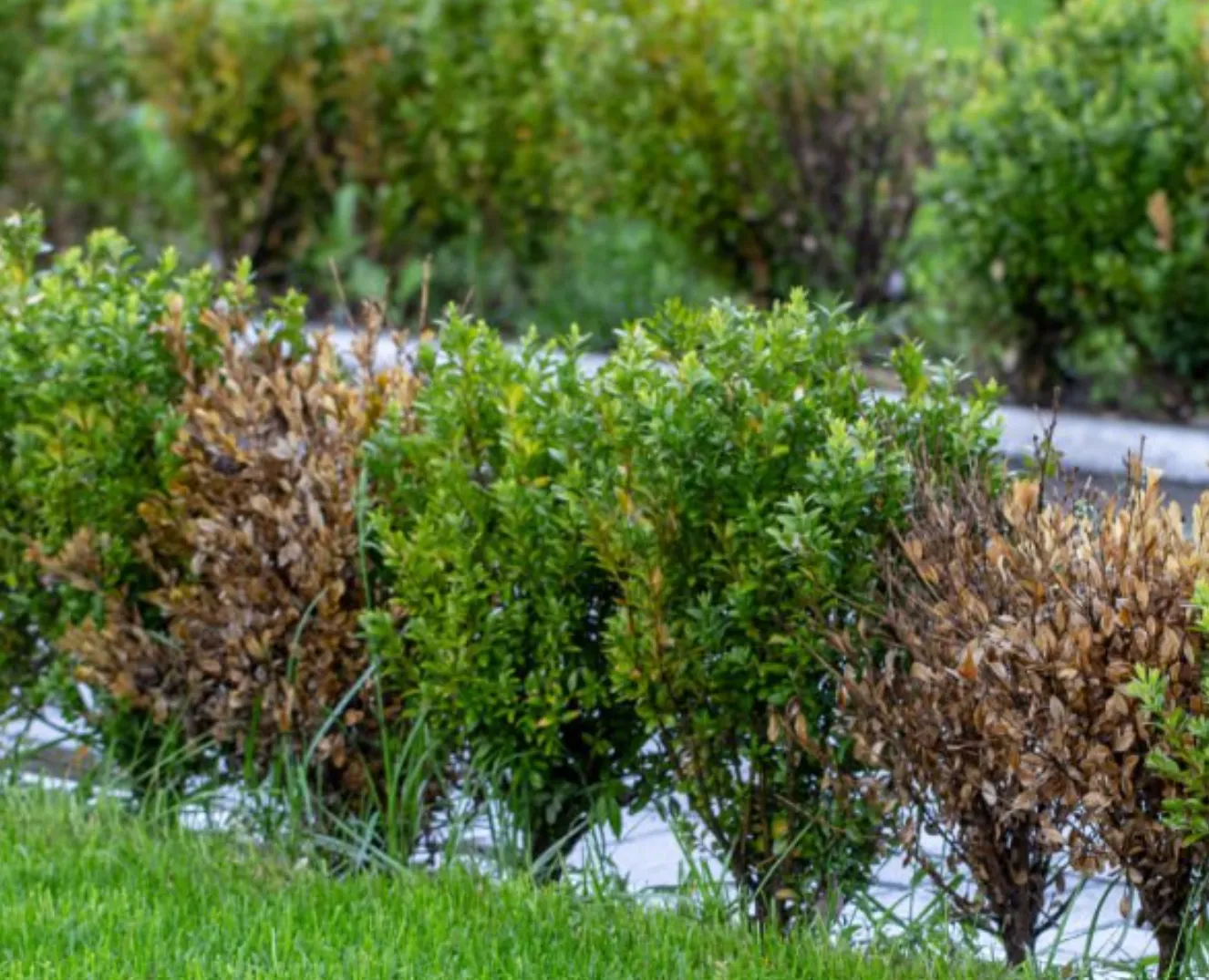
If your arborvitae, boxwoods, hollies, or evergreen shrubs turned brown after winter, you are not alone. Every spring, homeowners across Bucks County begin noticing dead-looking foliage, bronzing needles, and scorched evergreen leaves after harsh winter weather.
This type of damage is commonly known as winter burn.
In Bucks County and Montgomery County, winter burn is especially common after:
- windy cold fronts,
- freeze-thaw cycles,
- dry autumn weather,
- road salt exposure,
- and fluctuating winter temperatures.
The good news? Many plants can recover with time and proper care. The challenge is knowing when to wait, when to prune, and when permanent damage has occurred.
At Kelly Grow Turf and Plant Management, we help homeowners throughout Doylestown, Yardley, Newtown, Warrington, Richboro, and surrounding areas diagnose and recover winter-damaged landscapes every spring.
Concerned About Winter Damage on Your Shrubs or Evergreens?
Kelly Grow Turf and Plant Management provides professional plant health care services throughout Bucks County and Montgomery County, PA.
Call 267.962.6527 or email info@kellygrowturf.com
Request a consultation through:
https://kellygrowturf.com/
What Is Winter Burn?
Winter burn is a type of cold-weather plant injury that occurs when evergreen trees and shrubs lose moisture faster than their roots can replace it.
Unlike deciduous trees, evergreens continue to lose water through their foliage during winter. When the ground freezes, roots cannot absorb enough moisture to keep up with this water loss.
According to Penn State Extension, winter burn is most commonly caused by:
- winter desiccation,
- drying winds,
- frozen soil,
- and direct winter sun exposure.
This dehydration damages plant tissue, causing foliage to turn:
- brown,
- bronze,
- tan,
- or scorched-looking.
Why Winter Burn Happens in Bucks County
Winter burn is especially common in Southeast Pennsylvania because of our changing winter weather patterns.
Bucks County landscapes regularly experience:
- rapid freeze-thaw cycles,
- strong winter winds,
- exposed suburban landscapes,
- clay-heavy soils,
- and winter drought stress.
Many homeowners are surprised to learn that winter burn often starts months earlier during dry fall conditions.
Plants entering winter already stressed or dehydrated are much more vulnerable to damage once temperatures drop.
Properties in exposed areas like Upper Makefield, Solebury, Buckingham, and open developments throughout Warrington or Northampton Township often experience more severe winter burn due to wind exposure.
Common Trees & Shrubs Affected by Winter Burn
Arborvitae
Arborvitae are among the most common winter burn victims in Bucks County. Browning often appears:
- on the south or west side,
- near roadways,
- or on exposed corners of properties.
Boxwoods
Boxwoods frequently develop:
- orange bronzing,
- tan leaf scorch,
- or patchy discoloration after harsh winters.
Young boxwoods are particularly susceptible.
Hollies
Broadleaf hollies lose moisture rapidly during windy winter weather and may show leaf curling or browning in spring.
Rhododendrons & Azaleas
These broadleaf evergreens are vulnerable to winter desiccation, especially when planted in windy or sunny locations.
What Winter Burn Looks Like
Winter burn symptoms can vary depending on plant type and severity.
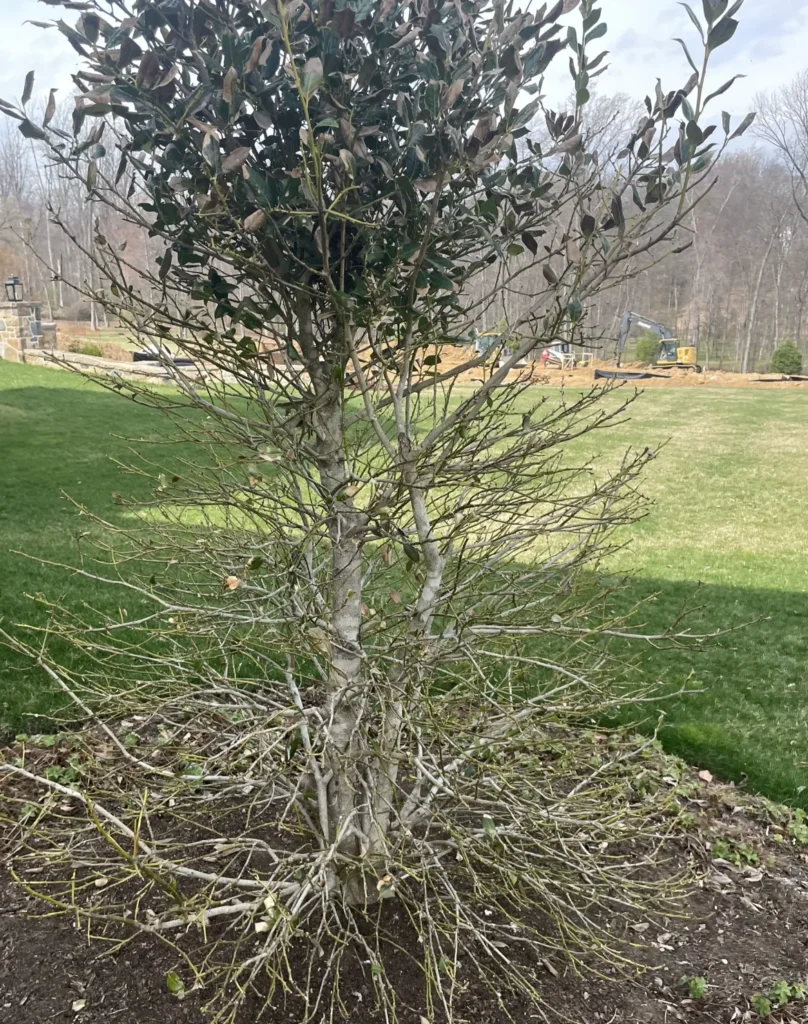
Common signs include:
- brown or bronze foliage,
- dried leaf edges,
- needle drop,
- branch tip dieback,
- patchy discoloration,
- or dead outer growth.
Damage often appears:
- on one side of the plant,
- on exposed sections,
- or higher on the shrub where wind exposure is greatest.
In many cases, the interior portions of the plant remain healthy while outer foliage suffers damage.
How Long Does Winter Burn Recovery Take?
This is the question we hear most often from homeowners across Bucks County.
The answer depends on:
- the severity of damage,
- plant species,
- root health,
- and whether live buds remain intact.
Mild Winter Burn
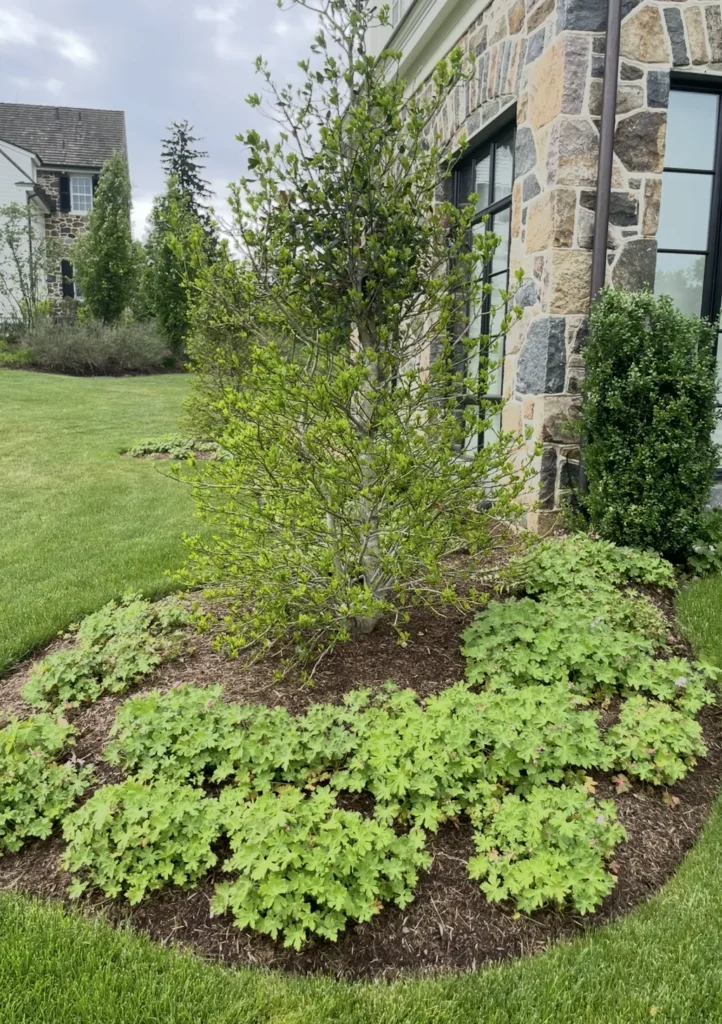
Light bronzing or tip burn often improves naturally within 4–8 weeks during spring growth.
Many evergreens push fresh green growth once soil temperatures warm consistently.
Moderate Damage
Shrubs with larger browned sections may take an entire growing season to partially recover.
New growth may gradually fill in damaged areas through late spring and summer.
Severe Winter Burn
If branches are completely dead or buds were destroyed, recovery may not occur.
In these cases:
- selective pruning,
- reshaping,
- or replacement
may eventually be necessary.
Should You Cut Off Brown Foliage Right Away?
Usually, no.
One of the biggest mistakes homeowners make is pruning too early in spring.
According to Penn State Extension, damaged foliage may appear dead while underlying tissue is still alive. Plants often need time to break dormancy before recovery becomes visible.
A simple scratch test can help:
- Green tissue beneath bark = alive
- Brown/dry tissue = dead
We typically recommend waiting until:
- consistent spring growth begins,
- buds start swelling,
- and new growth patterns become visible.
This prevents unnecessary pruning of recoverable branches.
How to Help Evergreen Shrubs Recover
Healthy recovery depends on reducing stress while encouraging new growth.
Helpful recovery practices include:
Proper Watering
Evergreens recovering from winter stress benefit from deep, consistent watering during dry spring periods.
Mulching
Mulch helps:
- stabilize soil temperatures,
- conserve moisture,
- and reduce root stress.
Avoid piling mulch directly against trunks or stems.
Soil Health Support
Compacted or depleted soils slow recovery.
Improving:
- microbial activity,
- nutrient availability,
- and root health
can significantly improve plant resilience.
Selective Pruning
Once new growth begins, dead or damaged branches can be carefully pruned to improve appearance and encourage healthy regrowth.
Plant Health Treatments
Professional plant health care programs may help support stressed trees and shrubs through:
- soil injections,
- nutrient support,
- stress-response treatments,
- and proactive monitoring.
Kelly Grow’s Plant Health Care Programs include:
- organic soil injections,
- carbon and humate treatments,
- root-zone support,
- and seasonal monitoring designed to improve long-term plant vitality.
When Winter Burn Is Permanent
Sometimes winter damage extends beyond foliage.
Permanent damage is more likely when:
- branches become brittle,
- bark splits occur,
- buds fail to emerge by late spring,
- or root systems were severely stressed before winter.
In severe cases, replacement may be more practical than long-term recovery.
This is especially common with:
- newly planted shrubs,
- improperly watered fall installations,
- or plants already weakened by drought or disease.
How to Prevent Winter Burn Next Season
The best winter burn treatment is prevention.
Water Thoroughly Before Winter
One of the most important preventive measures is ensuring shrubs enter winter properly hydrated.
Improve Soil Health
Healthy soil improves:
- moisture retention,
- root development,
- and stress tolerance.
Use Proper Mulch Depth
A 2–3 inch mulch layer helps protect roots from rapid temperature fluctuations.
Protect Against Wind Exposure
Burlap barriers or wind screens can help shield vulnerable plants from drying winter winds.
Avoid Late-Season Overfertilization
Late nitrogen applications can stimulate tender growth that becomes vulnerable to winter injury.
Choose Hardy Plant Varieties
Plant selection matters. Some cultivars tolerate Pennsylvania winters much better than others.
Professional Plant Health Care in Bucks County
At Kelly Grow Turf and Plant Management, we help homeowners throughout Bucks County and Montgomery County diagnose and manage winter stress on trees and shrubs.
Our Plant Health Care Programs focus on:
- soil health,
- proactive monitoring,
- seasonal nutrient support,
- and environmentally responsible treatments tailored to local conditions.
We proudly serve homeowners in:
- Doylestown,
- Newtown,
- Yardley,
- Richboro,
- Warrington,
- Buckingham,
- Southampton,
- and surrounding areas.
Seeing Brown Evergreens or Winter-Damaged Shrubs?
Kelly Grow Turf and Plant Management can help evaluate winter burn damage and recommend recovery solutions tailored to your landscape.
Call 267.962.6527
Email info@kellygrowturf.com
Get an Instant Quote or Request a Consultation:
https://kellygrowturf.com/instant-quote/
Frequently Asked Questions
Can arborvitae recover from winter burn?
Yes, mild to moderate arborvitae winter burn often recovers during spring and summer growth if buds and branches remain alive.
Should I cut brown branches off immediately?
Usually no. Wait until plants begin actively growing in spring so you can determine which branches are truly dead.
What causes winter burn on shrubs?
Winter burn is primarily caused by moisture loss during winter when frozen soil prevents roots from replacing lost water.
Will watering help winter burn recovery?
Yes. Consistent deep watering during dry spring periods helps support stressed plants recovering from winter injury.
Why are only parts of my shrubs brown?
Winter burn often affects the most exposed areas first, especially sections facing wind, sun, or road salt exposure.
Can fertilizer fix winter burn?
Not immediately. Recovery depends more on root health, moisture, and stress reduction than aggressive fertilization.
Resources
Penn State Extension
Preventing Winter Burn on Evergreen Landscape Plants
https://extension.psu.edu/preventing-winter-burn-on-evergreen-landscape-plants